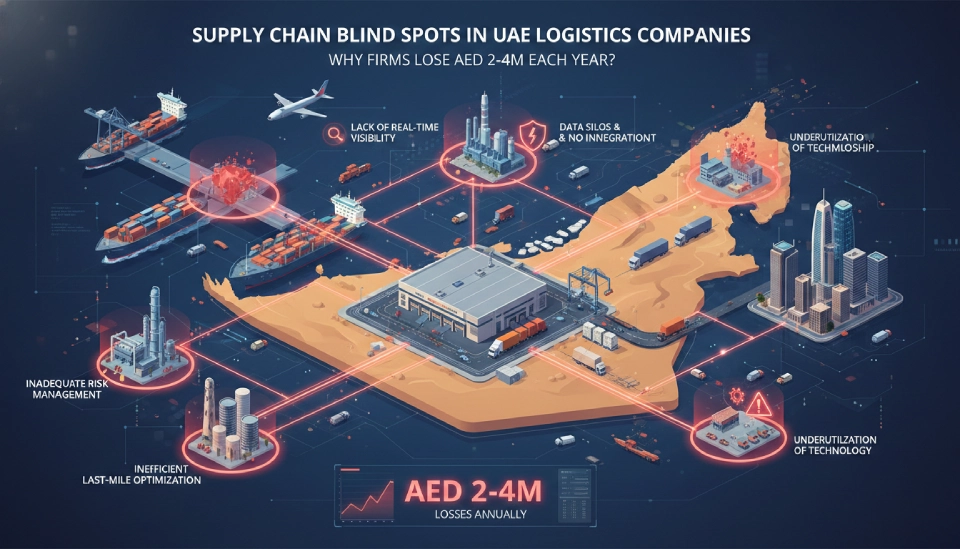
Supply Chain Blind Spots in UAE Logistics Companies
Why Firms Lose AED 2–4M Each Year?
Supply chain blind spots happen when UAE logistics companies can’t see what’s going on with their shipments, inventory or suppliers in time. This lack of visibility causes delays and financial losses. Research shows that poor supply chain visibility can increase operating costs by up to 15 percent. Many logistics firms in the UAE lose between AED 2 million and AED 4 million each year due to these hidden gaps.
The UAE is a logistics hub in the Middle East. Dubai’s Jebel Ali Port handled over 14 million containers recently. As supply networks get more complex it’s crucial for companies to have visibility into their operations. Companies that fix their spots improve delivery reliability and reduce risks.
What Are Supply Chain Blind Spots in UAE Logistics Companies?
Supply chain blind spots are areas where managers lack visibility into shipments warehouse inventory or supplier activities. These gaps prevent companies from detecting delays or disruptions
Studies show that companies with real-time logistics tracking improve efficiency by 20 percent or more. Common blind spots in logistics operations include:
- Missing shipment status updates
- Warehouse inventory mismatches
- Delayed communication with suppliers
- Manual tracking systems that don’t share data
Visibility gaps affect operational decisions. Managers may struggle to:
- Plan delivery schedules
- Track inventory accurately
- Respond to shipment delays
- Monitor supplier performance
Better operational visibility helps logistics companies improve planning accuracy and reduce supply chain risks.
Resources
- Supply Chain Visibility Strategy Guide
- Warehouse Management System Overview
- Logistics Data Analytics Guide
Why Do Supply Chain Blind Spots in UAE Logistics Companies Cause Losses of AED 2–4M?
Supply chain spots create financial losses because operational errors increase costs and reduce productivity. Limited visibility makes it hard to track cargo movements and inventory levels.
Research shows that companies without tracking systems can lose 8 to 10 percent of operational revenue due to inefficiencies. Major cost drivers created by spots include:
- Delayed cargo shipments
- Inventory shortages or excess stock
- Manual tracking processes
- Poor coordination between logistics partners
logistics systems increase operational complexity. Many companies manage systems for:
- Warehouse operations
- Transportation planning
- Procurement data
- Supplier communication
Disconnected systems prevent managers from seeing the full supply chain picture. Financial impact may include:
- Higher transport expenses
- Compensation for deliveries
- Contract penalties
- Operational labor inefficiencies
Small operational problems add up over time and lead to millions in annual losses.
Resources
- Logistics Cost Optimization Guide
- Freight Management System Insights
- Inventory Control Best Practices
Where Do Supply Chain Blind Spots in UAE Logistics Companies Usually Occur?
Supply chain blind spots usually appear in warehouses, shipment tracking systems and supplier coordination. Logistics operations involve moving parts. Visibility gaps often occur where systems or teams don’t share information.
Common operational areas where blind spots occur include:
- Warehouse inventory management
- Shipment tracking systems
- Mile delivery monitoring
- Supplier communication processes
Warehouse operations create frequent visibility issues. Examples include:
- Incorrect inventory counts
- Delayed stock updates
- Manual record-keeping errors
Shipment tracking gaps create another challenge. Companies may experience:
- Missing delivery status updates
- Limited driver tracking
- Delayed cargo location data
Supplier coordination also creates spots. Supply chain disruptions occur when:
- Supplier schedules change
- Shipment data arrives late
- Communication channels fail
Improving data integration across these areas reduces visibility gaps significantly.
Resources
- Warehouse Visibility Improvement Guide
- Logistics Partner Integration Guide
- Last Mile Delivery Strategy
How Do Supply Chain Blind Spots in UAE Logistics Companies Impact Business Performance?
Supply chain blind spots reduce efficiency and customer satisfaction. Visibility gaps lead to delays, cost increases and service failures.
Customer surveys show that 70 percent of clients prioritize delivery reliability when selecting logistics partners. Operational performance problems include:
- Delayed shipments
- warehouse processes
- Increased transport costs
- Inaccurate demand forecasting
Customer relationships also suffer. Service disruptions may cause:
- Delivery complaints
- Contract cancellations
- customer retention
- Negative industry reputation
Logistics companies rely heavily on reliability and trust. Businesses that improve visibility often increase customer satisfaction and reduce delivery failures.
Resources
- Customer Experience in Logistics Guide
- Logistics Performance Metrics Guide
- Supply Chain Risk Management Guide
How Can UAE Logistics Companies Identify Supply Chain Blind Spots?
UAE logistics companies identify supply chain spots by analyzing logistics data and reviewing operational workflows. Operational gaps often appear through repeated delivery delays or inventory discrepancies.
Companies can detect spots by reviewing:
- Shipment delay patterns
- Inventory error reports
- Delivery complaint trends
- Supplier performance data
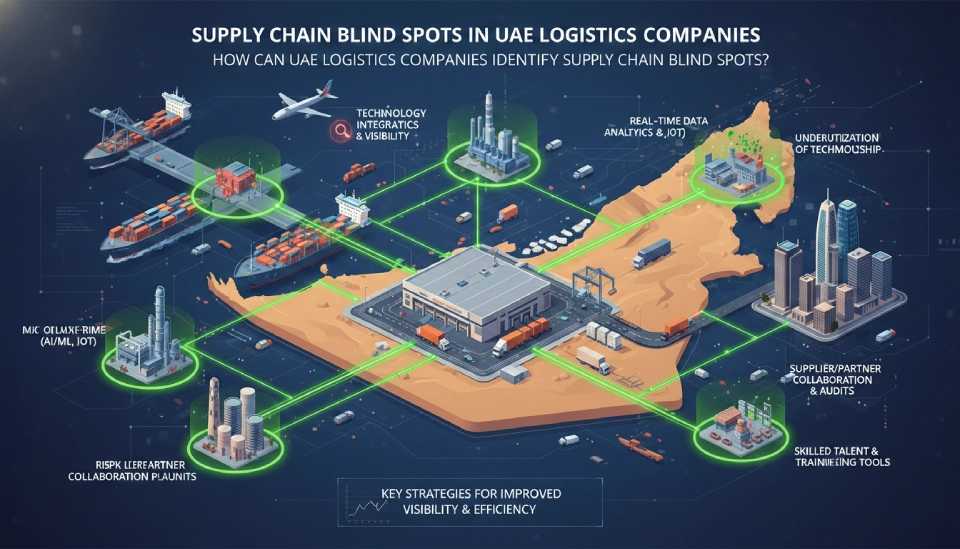
Supply chain audits also reveal hidden inefficiencies. These audits evaluate:
- Warehouse operations
- Cargo handling procedures
- Transportation planning
- Supplier communication systems
Analytics dashboards help monitor logistics performance. Managers can track:
- Shipment status
- Inventory movement
- Delivery timelines
- Operational performance indicators
Data-driven monitoring helps companies identify where visibility gaps exist.
Resources
- Supply Chain Audit Framework
- Logistics Data Monitoring Tools
- Shipment Performance Tracking Guide
How Can UAE Logistics Companies Fix Supply Chain Blind Spots?
UAE logistics companies fix supply chain spots by adopting digital logistics technologies and integrating supply chain data. Technology plays a role in improving supply chain visibility.
Research shows that digital supply chains can improve efficiency by 25 percent or more. Important visibility technologies include:
- Real-time shipment tracking systems
- Warehouse management platforms
- Cargo monitoring sensors
- Supply chain analytics tools
Integrated logistics platforms improve communication between systems. Centralized dashboards allow companies to monitor:
- Warehouse activity
- Shipment movement
- Supplier updates
- Delivery schedules
Operational strategies also reduce spots. Companies can improve visibility by:
- Building logistics dashboards
- Improving supplier communication
- Automating inventory monitoring
- Using data-driven demand planning
Digital transformation helps logistics companies gain operational control.
Resources
- Digital Supply Chain Transformation Guide
- Real-Time Logistics Tracking Strategy
- Logistics Technology Adoption Guide
Key Takeaways
Supply chain blind spots create operational visibility gaps across logistics networks. Important insights include:
- Logistics visibility gaps can cause losses of AED 2 to 4 million annually
- Warehouse operations and shipment tracking create the common blind spots
- Poor supply chain visibility increases transport costs and delivery delays
- Real-time logistics tracking improves supply chain efficiency
- Digital logistics systems help companies detect and eliminate blind spots
Companies that improve supply chain visibility reduce risks and strengthen customer trust.