Planning Your S/4HANA Migration Successfully
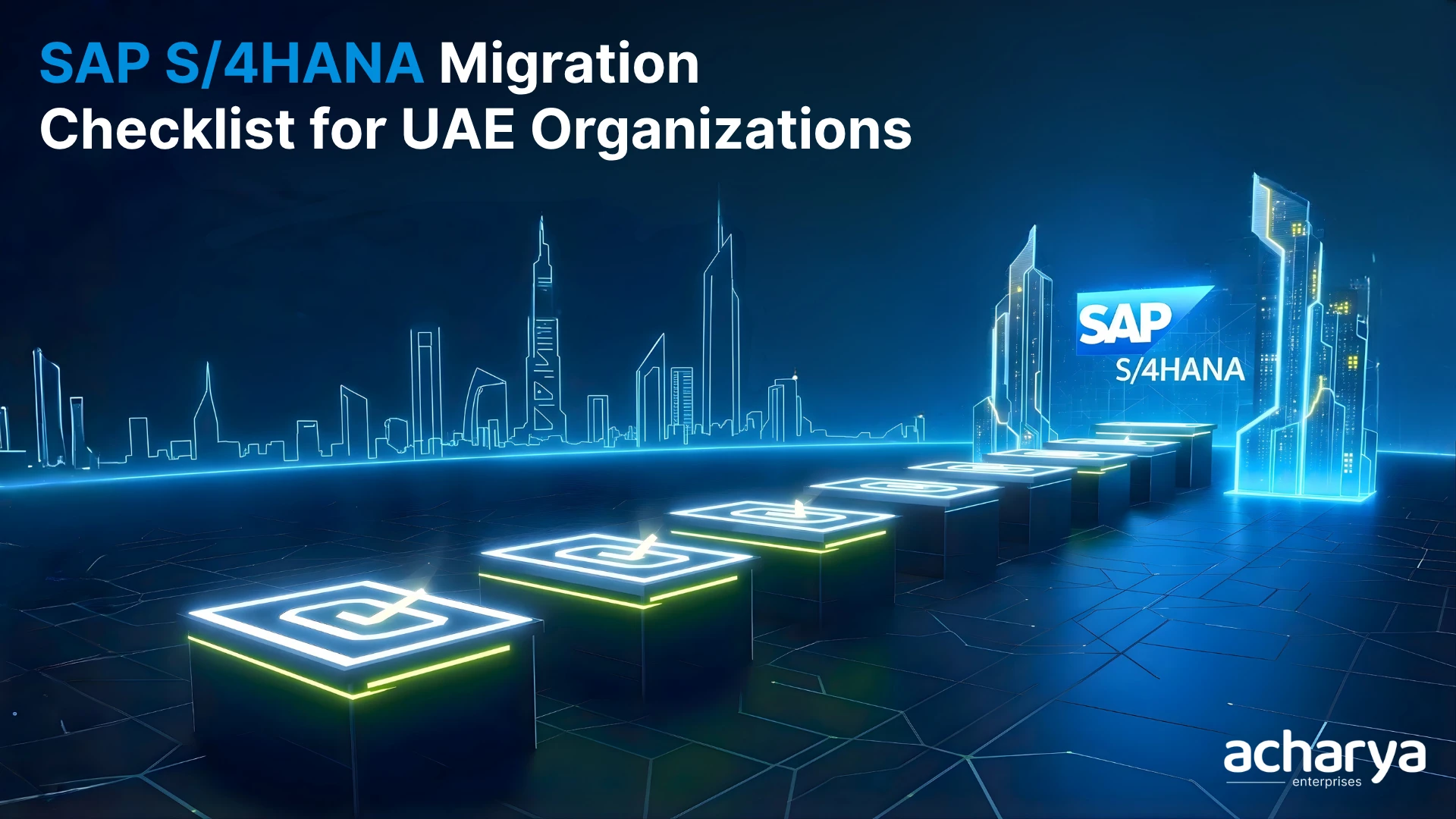
The 2027 SAP ECC end-of-life deadline is approaching faster than many UAE organizations realize. If your company still runs legacy SAP ECC systems, you need a structured S/4HANA migration checklist to guide your transformation. This comprehensive guide covers everything from pre-migration assessment through post-go-live optimization, helping you navigate one of the most critical technology transitions your organization will undertake.
SAP S/4HANA represents far more than a system upgrade. It’s a strategic modernization that impacts your entire technology infrastructure, business processes, and organizational capabilities. Organizations that begin migration planning now can execute smoothly and avoid the compressed timelines and higher costs that rushed implementations create.
Why Should Your UAE Organization Prioritize SAP S/4HANA Migration Now?
The 2027 SAP ECC end-of-life deadline creates an unavoidable business imperative for every UAE organization running legacy SAP systems. SAP has confirmed end-of-support, meaning no security patches, compliance updates, or technical assistance after 2027, leaving organizations exposed to data breaches, compliance violations, and operational failures.
UAE organizations face additional urgency. Government digital transformation initiatives and industry-specific regulations (DHA for healthcare, DFSA for financial services, and sector-specific mandates) increasingly require modern, compliant systems. Organizations delaying migration risk falling behind competitive peers who gain the operational advantages S/4HANA delivers.
Beyond regulatory pressure, technical debt grows daily on legacy systems. Maintenance costs rise, integration becomes more difficult, and organizations struggle to attract and retain technical talent comfortable supporting aging platforms. Every month of delay increases complexity and extends migration timelines later.
Why now matters:
- 2027 deadline is closer than most organizations realize (18-36 months for many)
- Migration timelines extend 18 to 48 months depending on complexity
- Early starters secure experienced consulting resources and avoid market bottlenecks
- Organizations planning now can modernize during optimal business cycles
What Real Business Outcomes Does S/4HANA Deliver for UAE Organizations?
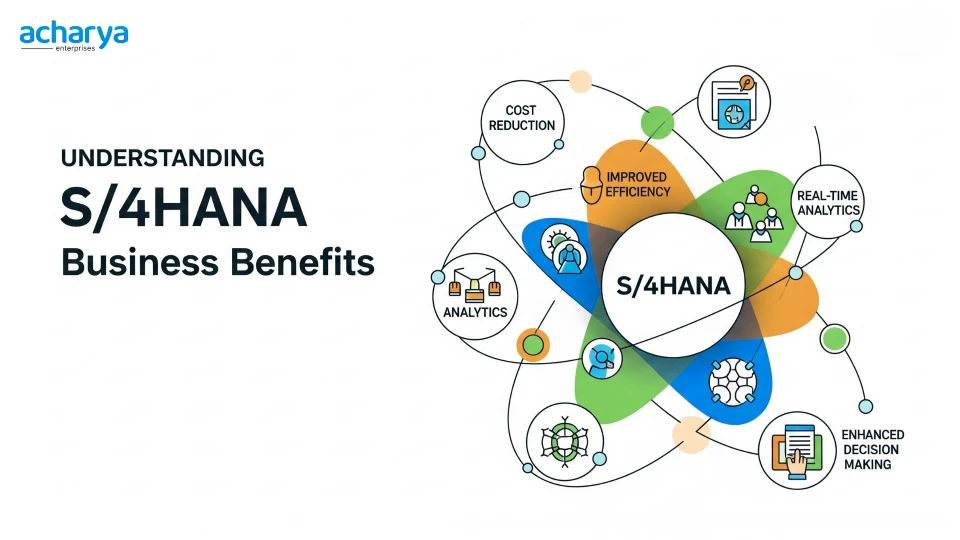
S/4HANA migration delivers measurable business value across financial, operational, and strategic dimensions that justify the investment for most organizations. The system operates on next-generation technology that dramatically improves processing speed, data accessibility, and decision-making quality compared to legacy ECC platforms.
Cost and efficiency improvements: Organizations typically reduce operating costs 15-25% through process optimization, automation, and reduced infrastructure overhead. Real-time processing replaces batch operations, eliminating manual workarounds and freeing IT teams from maintenance-intensive legacy system management. Fewer customizations and simpler system architecture reduce support burden significantly.
Compliance and risk reduction: S/4HANA simplifies compliance with UAE regulations including VAT reporting, data residency requirements, and industry-specific standards. The system provides better audit trails, built-in compliance controls, and faster regulatory reporting, reducing compliance risk and audit preparation time. Security features exceed legacy systems substantially, protecting sensitive data through modern encryption and access controls.
Data insights and business agility: Real-time analytics replace month-end reporting cycles, enabling faster decision-making. Organizations gain visibility into business performance instantly rather than waiting for manual report generation. This agility helps companies respond to market changes, optimize supply chains, and identify revenue opportunities faster than competitors on legacy systems.
Strategic positioning: S/4HANA positions organizations to adopt emerging technologies like artificial intelligence and advanced analytics. Legacy systems cannot accommodate these capabilities without significant customization. Companies modernizing gain long-term competitive advantage through technology readiness.
What’s the Best S/4HANA Migration Path for Your Organization?
Three distinct migration approaches exist, each with different cost, timeline, risk, and business impact profiles suited to different organizational situations and risk tolerances.
Brownfield Migration (Modification Approach): This approach preserves your existing system landscape while upgrading to S/4HANA, retaining custom developments and business process configurations that evolved over years. Brownfield migration typically takes 24-36 months, costs less upfront, and creates lower execution risk because business processes remain largely unchanged. However, legacy customizations often complicate the upgrade, increasing technical effort and ongoing complexity. This approach works best for organizations with stable, optimized business processes and significant custom functionality that would be costly to rebuild.
Greenfield Migration (New Implementation): Greenfield implementations replace everything with new S/4HANA instances, adopting standard business processes aligned to SAP best practices. This approach takes 18-30 months, forces business process improvements, and creates cleaner technical architectures requiring less future maintenance. However, greenfield requires significant change management, higher execution risk during transition, and business process redesign effort. Organizations must accept change and discontinue legacy processes not supported by new systems. Greenfield works best for organizations willing to modernize business processes and those with less legacy customization.
Hybrid Approach: Many organizations blend brownfield and greenfield elements, modernizing critical processes while preserving stable, optimized legacy systems. Hybrid approaches balance risk, cost, and transformation benefit, making them increasingly popular for complex organizations.
Choosing your path requires evaluating:
- System customization complexity (high customization favors brownfield)
- Business process maturity (stable processes support greenfield)
- Risk tolerance and timeline flexibility
- Budget constraints and available resources
- Change management capability and organizational readiness
How Should You Assess Your Current SAP Environment Before S/4HANA Migration?
A comprehensive pre-migration assessment forms the foundation for realistic planning, accurate budgeting, and effective risk mitigation. This assessment identifies technical complexity, data quality issues, and business requirements that shape your migration approach and resource planning.
Technical assessment focuses on system complexity: Your assessment team analyzes custom code, interfaces, enhancements, and technical debt accumulated over years. Systems with extensive customization require longer migration timelines and higher costs to remediate. Understanding this complexity upfront prevents budget overruns and schedule delays discovered too late. Legacy interfaces to external systems require redesign or replacement, representing significant hidden effort that assessments must identify.
Data quality evaluation is critical: Data migration success depends on source data quality. Assessment teams identify duplicate records, incomplete data, inactive master data, and inconsistent information that cause problems if migrated as-is. Organizations with data quality issues must invest in cleansing before migration to prevent carrying legacy problems into modern systems. This investment in clean data upfront costs less than fixing problems after go-live.
Business requirement mapping ensures alignment: Assessments document current business processes, identify gaps in standard S/4HANA functionality, and determine where customization or workarounds will be necessary. This mapping prevents surprises during implementation and identifies where business process change can reduce costs by eliminating custom development.
Structured assessment deliverables include:
- Current state technical inventory (custom code, interfaces, customizations)
- Data quality assessment with remediation roadmap
- Business process documentation and gap analysis
- Resource, timeline, and budget estimates
- Migration approach recommendation (brownfield, greenfield, or hybrid)
- Risk register and mitigation strategies
Is Your UAE Organization Ready for S/4HANA Migration from a People and Process Perspective?
Migration success depends equally on technical preparation and organizational readiness. Organizations with strong governance structures, clear change management planning, and executive alignment execute migrations effectively. Those lacking organizational readiness face delayed schedules, increased costs, and poor adoption outcomes.
Governance structures define decision rights and accountability: Effective migration programs establish a steering committee with executive sponsorship, clear escalation paths, and decision-making authority. This structure ensures business and IT leaders work together, conflicts resolve quickly, and critical decisions don’t stall progress. Governance committees typically include CFOs, CIOs, business unit leaders, and program directors meeting regularly to track progress and address risks.
Change management prepares the organization for transformation: Large-scale migrations affect every employee through new system interfaces, changed business processes, and different ways of working. Structured change management programs communicate the vision, address concerns, train end-users, and build support for the new system. Organizations neglecting change management experience poor adoption, continued use of legacy workarounds, and failure to realize projected benefits.
Stakeholder alignment ensures buy-in across organization: Migrations succeed when business leaders, IT teams, and end-users understand the rationale and their role in success. Lack of alignment creates resistance, workarounds, and failure to adopt new processes. Executives must clearly communicate why migration is necessary and how it benefits the organization.
Organizational readiness assessment includes:
- Executive commitment and sponsorship
- Change management capability and team staffing
- Current organizational culture and change tolerance
- Training infrastructure and capability
- End-user communication and engagement plans
- Resistance and mitigation strategies identified
How Do You Ensure Data Integrity During S/4HANA Migration?
Data migration represents one of the highest-risk migration elements because data quality directly impacts system functionality, compliance, and business decision-making. Organizations must execute data migration with discipline and rigor, including comprehensive validation and testing before cutover.
Data cleansing is prerequisite for successful migration: Legacy systems often contain duplicate records, obsolete data, incomplete information, and inconsistent master data. Migrating this data creates problems in the new system. Organizations must cleanse source data first, removing duplicates, standardizing formats, and ensuring completeness. Data cleansing typically requires 2-3 months of effort before actual migration. This investment costs less than troubleshooting data problems post-go-live.
Data mapping and transformation must account for structural differences: S/4HANA uses different data structures than legacy ECC systems. Complex transformation logic converts legacy data formats into new system structures. This mapping must be tested extensively because errors propagate through the entire system. Organizations often underestimate transformation complexity, leading to surprises during execution.
Validation strategies verify data completeness and accuracy: Before go-live, organizations must validate that all data migrated correctly, row counts match expectations, and converted values are accurate. Parallel testing runs both legacy and new systems simultaneously, comparing outputs to ensure data integrity. This parallel testing period typically lasts 1-2 weeks, allowing identification and correction of data issues before full cutover.
Data migration best practices include:
- Source data cleansing and validation before migration
- Comprehensive data mapping and transformation logic
- Parallel testing with legacy and new systems
- Reconciliation of control totals and key metrics
- Rollback procedures if data issues arise during cutover
- Post-migration validation and audit procedures
What Security and Compliance Considerations Must Guide S/4HANA Migration in UAE?
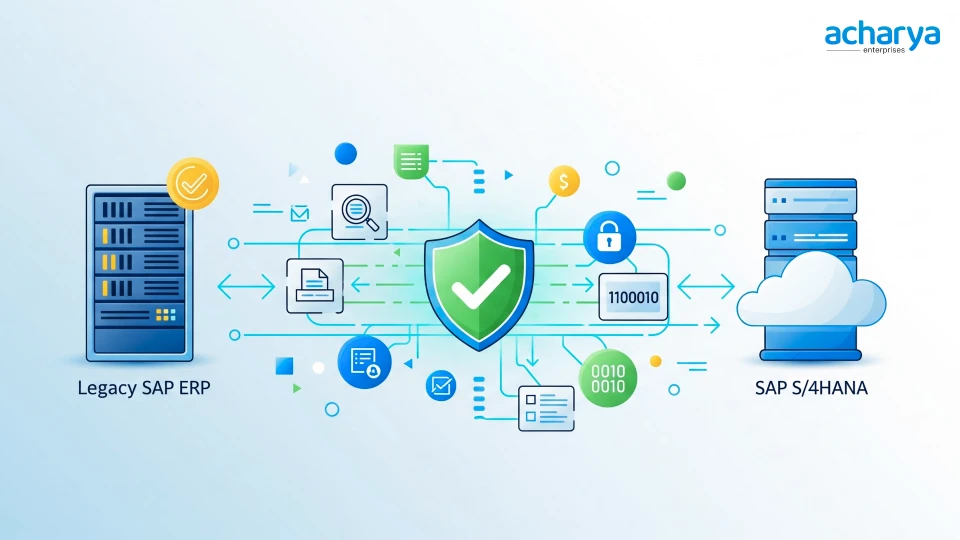
UAE regulatory environment demands that security and compliance frameworks be architected into migration approaches from the beginning. Organizations cannot retrofit compliance after go-live. Modern systems like S/4HANA offer advanced security and compliance capabilities that legacy systems cannot match, but only if properly configured.
UAE regulatory landscape requires specific attention: Organizations must navigate data residency requirements specifying that personal and organizational data remain within UAE borders. VAT compliance rules require accurate, auditable transaction recording and reporting. Industry-specific regulations govern healthcare (DHA), financial services (DFSA), government contracting, and other sectors. S/4HANA migrations must incorporate these requirements into system design rather than addressing them afterward through customization.
Data security and access controls prevent unauthorized access: S/4HANA provides role-based access controls, encryption, and audit logging that legacy systems struggle to implement comprehensively. Migration is the opportunity to implement least-privilege access controls, ensuring users have only the permissions necessary for their roles. Organizations should strengthen security posture during migration rather than accepting legacy permissions in new systems.
Compliance audit trails and documentation support regulatory requirements: S/4HANA creates detailed audit trails of system changes, transaction approvals, and user actions. These trails support compliance investigations, regulatory audits, and internal controls testing. Organizations must configure audit parameters correctly to capture the information compliance frameworks require.
Risk management during migration includes:
- Security vulnerability assessments of migration approach
- Data privacy impact assessments for data handling
- Compliance testing for regulatory requirements
- Cybersecurity controls validation
- Regulatory reporting capability verification
- Audit trail configuration and retention policies
How Long Should S/4HANA Migration Take and What’s the Realistic Cost for UAE Organizations?
Migration timelines and budgets vary substantially based on system complexity, chosen approach, and organizational readiness. However, typical S/4HANA migrations range from 18 to 48 months and cost multiple millions in AED, requiring structured financial planning and realistic expectations.
Timeline drivers determine realistic schedules: System complexity directly drives timeline. Simple organizations with minimal customization complete migrations in 18-24 months. Complex organizations with extensive custom code, intricate interfaces, and large data volumes require 36-48 months. Assessment findings determine the realistic timeline for your organization. Rushing timelines below realistic expectations guarantees quality compromises, increased costs from overtime and inefficiency, and higher go-live risk.
Budget components include multiple cost categories: Software licensing represents the foundation, with S/4HANA costs depending on system scale and deployment (cloud versus on-premise). Professional services from implementation partners constitute 40-60% of migration budgets, covering planning, development, testing, and go-live support. Internal resources, training, infrastructure upgrades, and contingency reserves add substantially to total cost. Organizations typically budget AED 5-50 million depending on complexity and organizational size.
Resource requirements extend beyond internal IT teams: Effective migrations require dedicated program managers, business analysts, solution architects, developers, testers, and change management specialists. Most organizations cannot staff these roles entirely internally, requiring experienced external partners. Competition for skilled SAP resources increases costs as organizations prepare for 2027 deadlines. Planning resource needs early improves outcomes and reduces costs.
Budget planning should account for:
- Software licensing and infrastructure costs
- Implementation partner professional services
- Internal resource allocation and training
- Data migration and system integration effort
- Testing and quality assurance
- Change management and training programs
- Contingency reserves (15-20% of project budget)
- Post-go-live support and optimization
How Do You Execute a Successful S/4HANA Go-Live with Minimal Business Disruption?
Comprehensive testing and carefully orchestrated go-live execution determine whether organizations achieve successful migration with minimal operational disruption. Testing reveals problems while they can be fixed. Go-live execution discipline minimizes the risk of failures, data loss, and extended downtime during cutover.
Testing progression validates system functionality and integration: Functional testing confirms that individual system features work correctly. Integration testing validates that systems communicate properly across interfaces. User acceptance testing (UAT) confirms that business users can complete their jobs on the new system. Load testing verifies that system performance meets requirements under expected volume. Each testing phase identifies and resolves issues before final cutover. Organizations rushing testing phases discover problems during go-live when fixes become expensive and time-consuming.
Parallel testing runs legacy and new systems simultaneously: During the transition period, both legacy and new systems process transactions in parallel. Outputs are compared to verify data integrity and system correctness. This parallel period typically runs 1-2 weeks, allowing identification of discrepancies and corrections before full commitment to the new system. Parallel testing provides confidence that the new system works correctly before discontinuing legacy operations.
Go-live execution must be meticulously planned and rehearsed: The actual transition from legacy to new systems occurs during a defined cutover window. Final data loads are executed, system verification occurs, and business operations shift to the new platform. This critical window requires clear procedures, trained personnel, and documented decision criteria. Cutover teams must understand their roles, have decision authority, and be empowered to escalate issues immediately. Rehearsals before actual cutover identify problems and build team confidence.
Testing and go-live components include:
- Unit testing of individual system components
- Functional testing of business processes
- Integration testing of system connections
- User acceptance testing with business users
- Load and performance testing
- Security testing and vulnerability assessment
- Parallel testing comparing legacy and new systems
- Cutover rehearsals and readiness assessments
- Go-live execution procedures and decision criteria
What Happens After S/4HANA Go-Live and How Do You Optimize System Performance?
The critical period following go-live determines whether organizations realize projected migration benefits. Extended support (hypercare), issue resolution, and ongoing optimization ensure successful adoption and return on investment.
Hypercare support during immediate post-go-live period is essential: The first 4-12 weeks after go-live typically involve intensive support as users encounter system operation questions, discover missing functionality, and need coaching on new processes. Dedicated hypercare teams provide rapid response, coaching, and issue resolution during this critical adoption period. Inadequate hypercare support leads to extended learning curves, frustration with new systems, and organizational pressure to revert to legacy systems. Well-executed hypercare builds confidence and accelerates business value realization.
Issue management and problem resolution prevent escalation: Problems inevitably arise during transition. Clear procedures for identifying, documenting, prioritizing, and resolving issues ensure that critical problems receive immediate attention while non-critical issues don’t consume excessive resources. Most critical issues resolve within hours or days with proper escalation procedures. Problem management discipline prevents minor issues from snowballing into major disruptions.
System optimization improves performance and efficiency: After operational stabilization, organizations focus on performance tuning, business process refinement, and feature adoption. Initial go-live configurations often prioritize achieving functionality over optimization. Performance optimization, feature adoption, and business process improvement continue 12-24 months post-go-live as organizations mature on the new system. This ongoing effort determines whether organizations achieve projected ROI and competitive advantages S/4HANA enables.
Post-go-live activities include:
- Hypercare support and user coaching (4-12 weeks)
- Issue management and problem resolution
- Business process refinement and optimization
- System performance tuning and configuration
- Advanced feature adoption and expansion
- Training on advanced capabilities
- Managed services transition planning
- ROI measurement and benefits tracking
ACHARYA ENTERPRISE: YOUR S/4HANA MIGRATION PARTNER
Acharya Enterprise specializes in end-to-end SAP S/4HANA migration services for UAE organizations. We combine deep technical expertise with business transformation knowledge, helping organizations navigate migration complexity and emerge with modern, efficient systems.
Our Full Implementation + License + Support service package covers the entire migration lifecycle. From pre-migration assessment through post-go-live optimization, our experienced team supports every phase of your transformation. We understand UAE regulatory requirements, organizational complexity, and the business outcomes that matter to your organization.
Why organizations choose Acharya for S/4HANA migration:
UAE expertise and local presence: We understand the UAE market, regulatory environment, and organizational context. Our team maintains local presence across emirates, providing on-site support and rapid response. We understand government sector requirements, healthcare compliance (DHA), financial services standards (DFSA), and sector-specific regulations that shape your migration approach.
Comprehensive S/4HANA capabilities: Our consultants bring proven experience with S/4HANA implementations across government, healthcare, manufacturing, retail, and logistics sectors. We have deep expertise in brownfield and greenfield migration approaches, helping organizations choose the right strategy for their situation. Our data migration excellence ensures clean data transitions that prevent post-go-live problems.
Global expertise with UAE focus: Operating in 10+ countries gives us perspective on diverse migration scenarios and proven best practices. We bring this global experience to UAE organizations while tailoring approaches to local requirements and business context.
Partnership approach: We position ourselves as long-term migration partners, not vendors. Our success depends on your successful adoption and ROI realization. We provide dedicated support, transparent communication, and commitment to your migration outcome.
CONCLUSION
SAP S/4HANA migration represents a significant undertaking, but the 2027 ECC deadline makes it an unavoidable business imperative for organizations still running legacy systems. Using a structured S/4HANA migration checklist approach covering assessment, planning, technical execution, testing, and post-go-live support dramatically improves outcomes while reducing risk and costs.
Organizations that begin migration planning now avoid the compressed timelines and higher costs that rushed implementations create. The decision points outlined in this guide help you develop a realistic migration approach aligned to your organization’s complexity, risk tolerance, and business objectives.
Your migration success depends on clear strategy, experienced guidance, and sustained organizational commitment throughout the multi-year transformation journey. Whether your organization chooses a brownfield, greenfield, or hybrid approach, partnering with experienced SAP professionals who understand your market and business context increases your chances of achieving projected benefits.
If you’d like to evaluate your specific S/4HANA migration approach, Acharya Enterprise offers comprehensive migration assessments for UAE organizations. Our team can help you understand your system complexity, develop realistic timelines and budgets, and recommend the migration strategy that optimizes your ROI. Contact us to discuss your S/4HANA migration strategy and begin your transformation journey with confidence.