SAP for UAE Hospitals: Connecting Clinical, Billing and Insurance in One System
SAP for UAE hospitals is a platform that brings together hospital clinical systems, billing operations and insurance claims management. Many healthcare organizations use applications in different departments. SAP for UAE hospitals helps connect these systems to make things more efficient and improve care. Research by Deloitte shows that using platforms can cut administrative costs in hospitals by up to 25 percent.
Hospitals in the UAE deal with a lot of records, insurance claims and financial transactions every day. When systems are not connected it slows down operations. Increases billing mistakes. SAP for UAE hospitals provides one platform that connects hospital data across departments.
What Is SAP for UAE Hospitals and Why Do Healthcare Providers Use It?
SAP for UAE hospitals is a system used to manage operations, billing systems and insurance processing all in one place. Healthcare providers use SAP platforms to connect hospital departments and keep patient and financial data.
Hospitals generate a lot of data every day. Clinical records, laboratory systems, pharmacy systems, billing platforms and insurance portals often work separately. SAP for UAE hospitals brings these systems together.
Some common things SAP for UAE hospitals can do include:
- Managing patient data in one place
- Automating hospital billing
- Processing insurance claims
- Providing reports for healthcare operations
When hospital systems are connected it improves coordination between medical teams and administrative departments. Healthcare organizations that use platforms often reduce delays and billing errors.
Resources
- SAP healthcare management solutions
- SAP enterprise integration services
- SAP digital transformation for healthcare

Why Do Hospitals Need SAP for UAE Hospitals to Connect Clinical, Billing and Insurance Systems?
SAP for UAE hospitals helps organizations get rid of data silos between systems, billing departments and insurance platforms. Many hospitals use applications across departments. Moving data manually between systems increases work and slows down hospital operations.
When hospital systems are not connected it creates operational challenges.
- Billing processes are done manually
- Insurance claims are submitted late
- Patient records are not consistent
- There is visibility into hospital financial performance
Research by McKinsey shows that administrative tasks take up nearly 30 percent of hospital operating costs. Connected systems reduce these inefficiencies.
SAP for UAE hospitals creates a platform for patient treatment records, financial data and insurance processing.
Resources
- SAP healthcare data integration
- SAP hospital management platforms
- SAP finance solutions for healthcare
How Does SAP for UAE Hospitals Connect Clinical Systems, Billing Systems and Insurance Platforms?
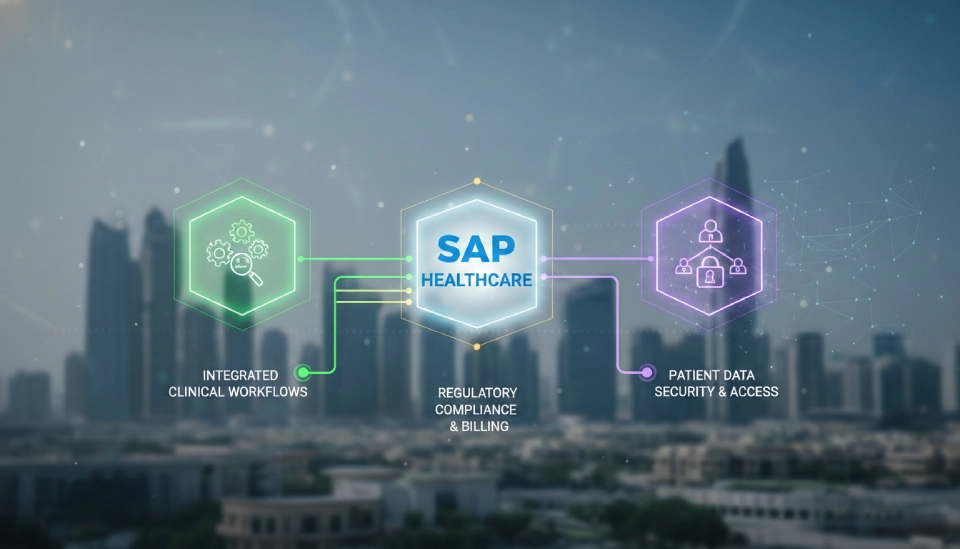
SAP for UAE hospitals connects hospital systems by integrating records, billing processes and insurance claims through shared data platforms. Hospital operations generate information that must be shared across several departments. Patient treatment data must connect with billing records and insurance claim systems.
SAP integration connects these systems through data management.
- Electronic medical records are integrated with hospital finance systems
- Patient treatment data is connected with billing processes
- Insurance claims are generated automatically
- Information is shared in time between departments
Automation reduces manual data entry. Hospital billing departments get treatment information directly from systems.
Insurance claims processing also becomes faster. Claims data flows automatically from treatment records to insurance platforms.
Studies on healthcare IT show that automated claims processing can reduce claim rejection rates by up to 15 percent.
Resources
- SAP healthcare system integration
- SAP insurance claims automation
- SAP hospital data management
What Operational Problems Can SAP for UAE Hospitals Solve in Healthcare Organizations?
SAP for UAE hospitals helps solve issues caused by disconnected hospital systems. Healthcare providers often struggle with insurance processing, billing inaccuracies and fragmented data visibility.
Several common operational challenges occur in hospitals.
- Insurance claims are approved late
- Billing errors happen due to missing treatment data
- There is visibility into hospital revenue
- Coordination between clinical and administrative teams is slow
The financial impact can be significant. Research by the Healthcare Finance Association shows that billing errors lead to revenue losses in hospitals.
SAP for UAE hospitals improves transparency across hospital operations. Financial teams get visibility into patient billing and insurance claims.
Clinical departments also benefit from coordination with administrative teams.
Resources
- SAP healthcare finance solutions
- SAP hospital operational analytics
- SAP enterprise reporting systems
What Key Features Should Hospitals Look for in SAP for UAE Hospitals Solutions?
SAP for UAE hospitals solutions include capabilities that support healthcare operations, management and insurance processing. Healthcare organizations must evaluate capabilities when selecting enterprise healthcare platforms.
- Managing patient data in one place
- Automating insurance claims
- Managing hospital billing
- Analyzing healthcare finances
- Integrating with hospital information systems
Hospitals also require data management. Patient records must comply with healthcare privacy regulations.
Research by Gartner highlights that secure healthcare data platforms are critical for protecting information.
SAP provides enterprise-level security and compliance capabilities for healthcare systems.
Resources
- SAP patient data management
- SAP healthcare financial systems
- SAP enterprise security solutions
How Can Healthcare Providers Successfully Implement SAP for UAE Hospitals?
Implementing SAP for UAE hospitals requires planning, system integration, data security and staff training. Healthcare organizations should approach implementation through planning.
- Designing hospital system integration architecture
- Ensuring patient data privacy compliance
- Training hospital staff on workflows
- Working with SAP healthcare consultants
Healthcare digital transformation projects require strong coordination between IT teams, hospital administrators and clinical departments.
Industry research shows that successful digital healthcare implementations depend on planning and staff adoption strategies.
Hospitals that follow implementation frameworks typically achieve faster system adoption and operational improvements.
Resources
- SAP healthcare implementation services
- SAP enterprise integration consulting
- SAP healthcare digital transformation
Key Takeaways
- SAP for UAE hospitals connects systems, billing operations and insurance claims in one platform
- Connected hospital platforms reduce administrative work and billing errors
- Automation improves insurance claims processing and financial visibility
- Hospitals benefit from patient and financial data management
- Successful implementation requires integration planning, security compliance and staff training