SAP S/4HANA PP/DS: When Basic Production Planning Is No Longer Enough
SAP S/4HANA PP/DS helps UAE manufacturers move beyond basic planning when capacity, sequencing, delivery dates, materials, and shop floor constraints become too complex to manage manually.
For factories in Dubai, Abu Dhabi, Sharjah, Ras Al Khaimah, and UAE free zones, basic planning can work until the business reaches a point where every delay creates AED cost leakage, overtime, late shipments, and customer escalation.
The question is not whether standard planning is useful. The question is when SAP advanced planning becomes necessary to protect delivery performance and production reliability.
What is SAP S/4HANA PP/DS?
SAP S/4HANA PP/DS is advanced production planning and detailed scheduling that helps manufacturers plan materials, capacity, constraints, and production sequences more accurately.
SAP S/4HANA PP/DS explained simply means Production Planning and Detailed Scheduling inside SAP S/4HANA.
It helps planners handle critical products, constrained resources, detailed order timing, and production feasibility. SAP Help describes PP/DS as a way to plan critical products and transfer planning results into SAP S/4HANA.
For UAE manufacturers reviewing SAP S/4HANA production planning capabilities , PP/DS is the next layer when normal planning cannot handle the real production complexity.
When is basic production planning no longer enough?
Basic production planning becomes insufficient when production depends on limited capacity, tight delivery dates, complex routings, frequent changes, and real shop floor constraints.
Basic SAP production planning can calculate materials, create planned orders, and support production control.
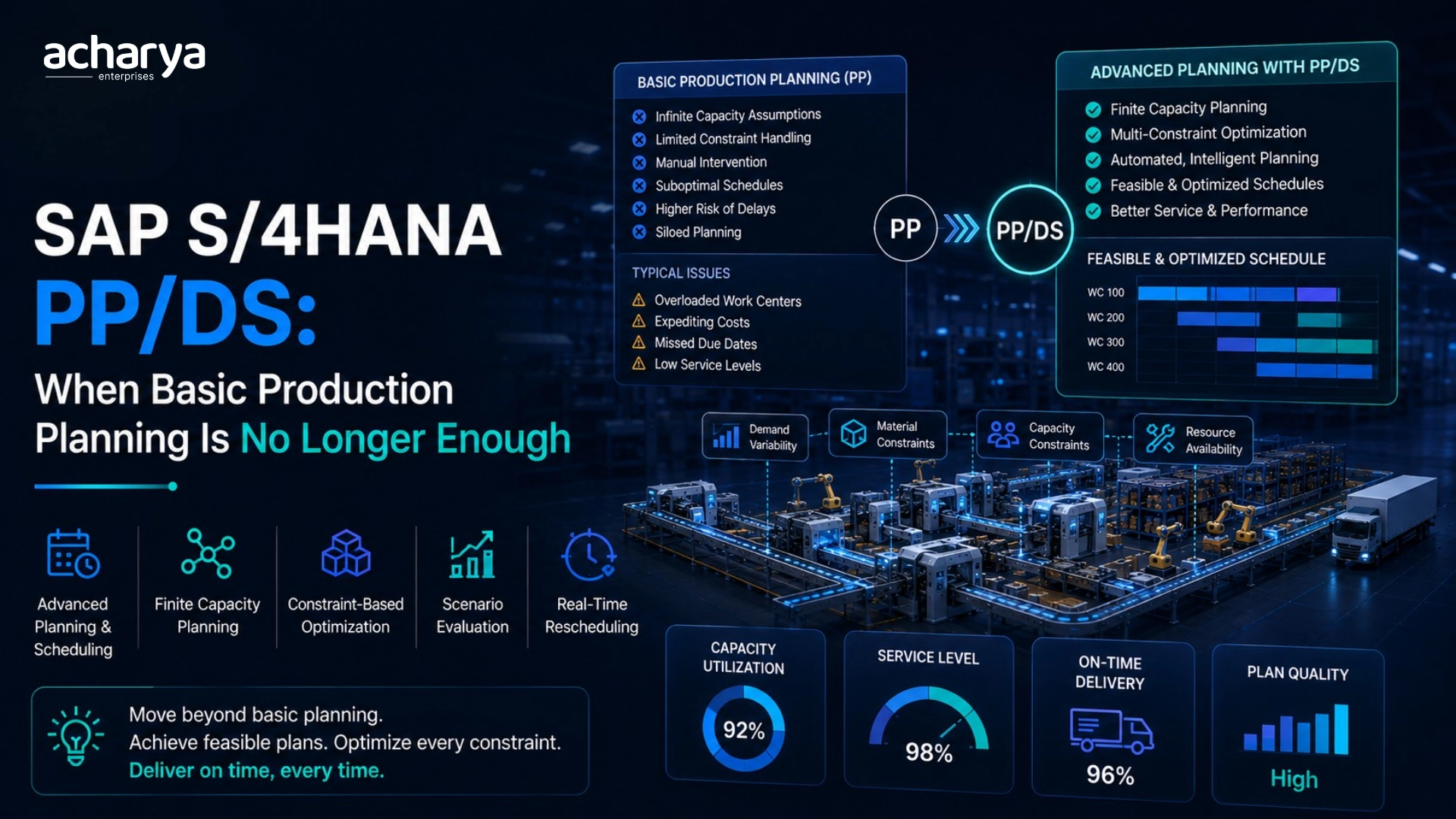
But it may fall short when planners need finite scheduling, detailed sequencing, resource constraints, and faster reaction to disruptions.
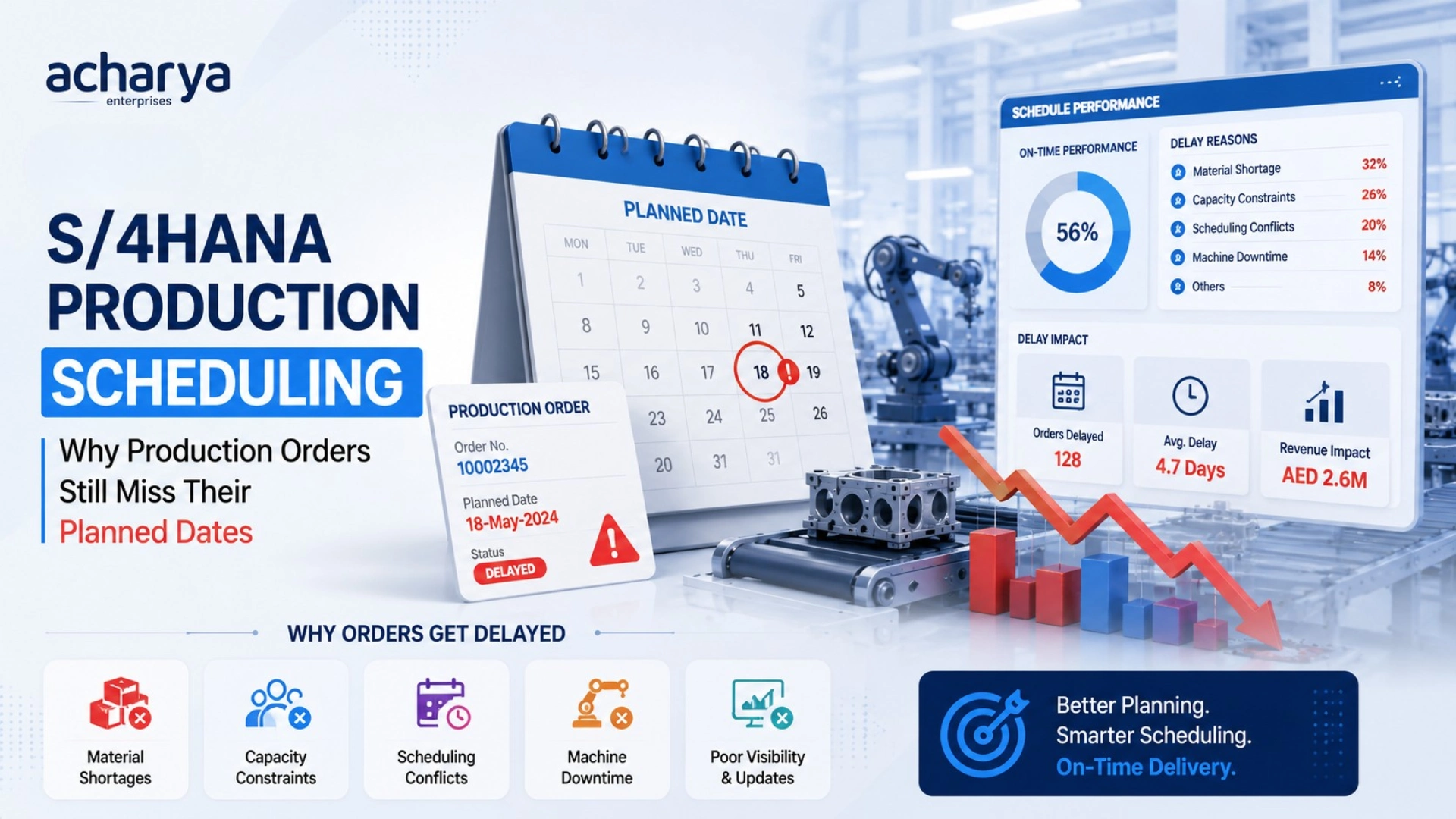
Warning signs include repeated rescheduling, overloaded work centers, missed order dates, manual Excel planning, urgent customer escalations, and production teams ignoring the system schedule.
Why do UAE manufacturers outgrow basic production planning?
UAE manufacturers outgrow basic planning when they manage multiple plants, high SKU volumes, export timelines, customer-specific orders, and fast-changing demand.
A single factory line may be manageable with standard planning. A multi-plant UAE manufacturing group is different.
Planning becomes harder when the business manages local demand, GCC exports, free-zone warehouses, supplier lead times, make-to-order jobs, and seasonal peaks.
This is where When to use SAP PP/DS becomes a business question. If planners spend more time correcting plans than using them, basic planning is no longer enough.
How is PP/DS different from standard MRP in SAP S/4HANA?
Standard MRP mainly checks material requirements, while PP/DS considers detailed capacity, sequencing, constraints, finite scheduling, and production feasibility.
SAP PP DS vs SAP PP module is not a question of replacing everything.
Standard MRP helps calculate what materials are needed and when. PP/DS goes deeper into how production can actually be scheduled with available resources.
A simple comparison:
| Planning area | Standard MRP | PP/DS |
| Main focus | Material requirements | Materials and capacity |
| Scheduling depth | Basic dates | Detailed scheduling |
| Resource limits | Limited control | Stronger constraint planning |
| Best fit | Simpler production | Complex manufacturing |
| Output | Planned supply | More feasible schedules |
How does PP/DS improve capacity planning?
PP/DS improves capacity planning by helping planners check whether machines, labor, work centers, and production lines can handle the planned workload.
Capacity is where many production plans fail.
The material may be available, but the work center may be overloaded. A machine may be available, but the sequence may create too many changeovers.
SAP S/4HANA advanced production planning helps planners see capacity pressure before production starts.
When manufacturers need to compare capacity scenarios before committing resources, production simulation before execution fits naturally here.
How does PP/DS reduce production order delays?
PP/DS reduces delays by helping planners identify bottlenecks, adjust schedules, prioritize orders, and react faster when materials or capacity change.
Production delays often start before the shop floor begins work.
The plan may already be unrealistic because the sequence is wrong, a work center is overloaded, or an urgent order was inserted without checking downstream impact.
How does SAP PP/DS improve scheduling? It gives planners a more detailed view of order timing, constraints, and resource usage so they can make better schedule changes before delays spread.
Why does detailed scheduling matter for complex manufacturing?
Detailed scheduling matters because small changes in machine availability, changeover time, order priority, or material readiness can affect the entire production plan.
In complex manufacturing, one change rarely stays isolated.
A late batch can push the next order. A changeover can reduce available capacity. A quality hold can block downstream operations.
This is why a SAP S/4HANA detailed scheduling solution matters for UAE manufacturers serving strict delivery windows, export customers, retail networks, or customer-specific production.
For deeper scheduling control, improve production scheduling accuracy connects naturally with this section.
Which manufacturers need SAP S/4HANA PP/DS the most?
PP/DS is most useful for manufacturers with constrained capacity, complex production lines, batch manufacturing, make-to-order production, volatile demand, or strict delivery commitments.
SAP PP/DS for complex manufacturing is most relevant when the production plan depends on more than material availability.
It is useful for FMCG, food and beverage, packaging, chemicals, automotive components, industrial goods, and custom manufacturing.
UAE manufacturers should consider PP/DS when they have:
- Shared machines or bottleneck work centers
- High SKU complexity
- Frequent schedule changes
- Strict customer delivery dates
- Export production pressure
- Make-to-order or batch production
- Manual schedule corrections
What should companies prepare before implementing PP/DS?
Companies should clean master data, review routings, define work center capacities, validate production versions, map constraints, and align planners on scheduling rules.
PP/DS does not fix poor planning data by itself.
A SAP PP/DS implementation guide should start with master data readiness. BOMs, routings, work centers, production versions, calendars, lead times, and capacity rules must reflect factory reality.
Companies should also define scheduling priorities. For example, should the system prioritize due date, setup reduction, customer priority, capacity leveling, or material availability?
If those rules are unclear, advanced planning only exposes the confusion faster.
How can Acharya Enterprise help with SAP S/4HANA PP/DS readiness?
Acharya Enterprise can help UAE manufacturers assess planning gaps, optimize SAP S/4HANA, improve production planning processes, support implementation, and train users.
Acharya’s Full Implementation + License + Support + Training package fits this need because PP/DS readiness depends on assessment, license planning, implementation, data migration, go-live, hypercare, and user adoption.
Acharya can help review planning pain points, validate master data, map production constraints, improve SAP scheduling, and support security and access controls during rollout.
For UAE CIOs, IT Directors, SAP PMOs, and manufacturing leaders, the goal is not to add complexity. The goal is to make production planning more realistic, visible, and executable.
Key Takeaways
SAP S/4HANA PP/DS helps UAE manufacturers improve detailed scheduling when standard production planning can no longer manage real factory constraints.
- PP/DS stands for Production Planning and Detailed Scheduling.
- Basic planning may be enough for simpler production environments.
- PP/DS becomes useful when capacity, sequencing, constraints, and frequent changes drive delays.
- Standard MRP focuses mainly on material requirements.
- PP/DS adds deeper capacity and scheduling control.
- UAE manufacturers with complex plants, high SKU counts, and strict delivery dates benefit most.
- Clean master data is essential before implementation.
- Acharya can support readiness, implementation, training, optimization, and post-go-live support.
Assess Your SAP S/4HANA PP/DS Readiness
If your UAE manufacturing team still depends on manual scheduling, repeated rescheduling, or overloaded work centers, the next step is a SAP S/4HANA PP/DS readiness assessment.
Acharya Enterprise can help review your production planning process, identify where basic planning falls short, and prepare your team for advanced scheduling with stronger data, controls, and user adoption.