8 Reasons UAE Procurement Teams Stop Using Excel and Move to SAP Ariba
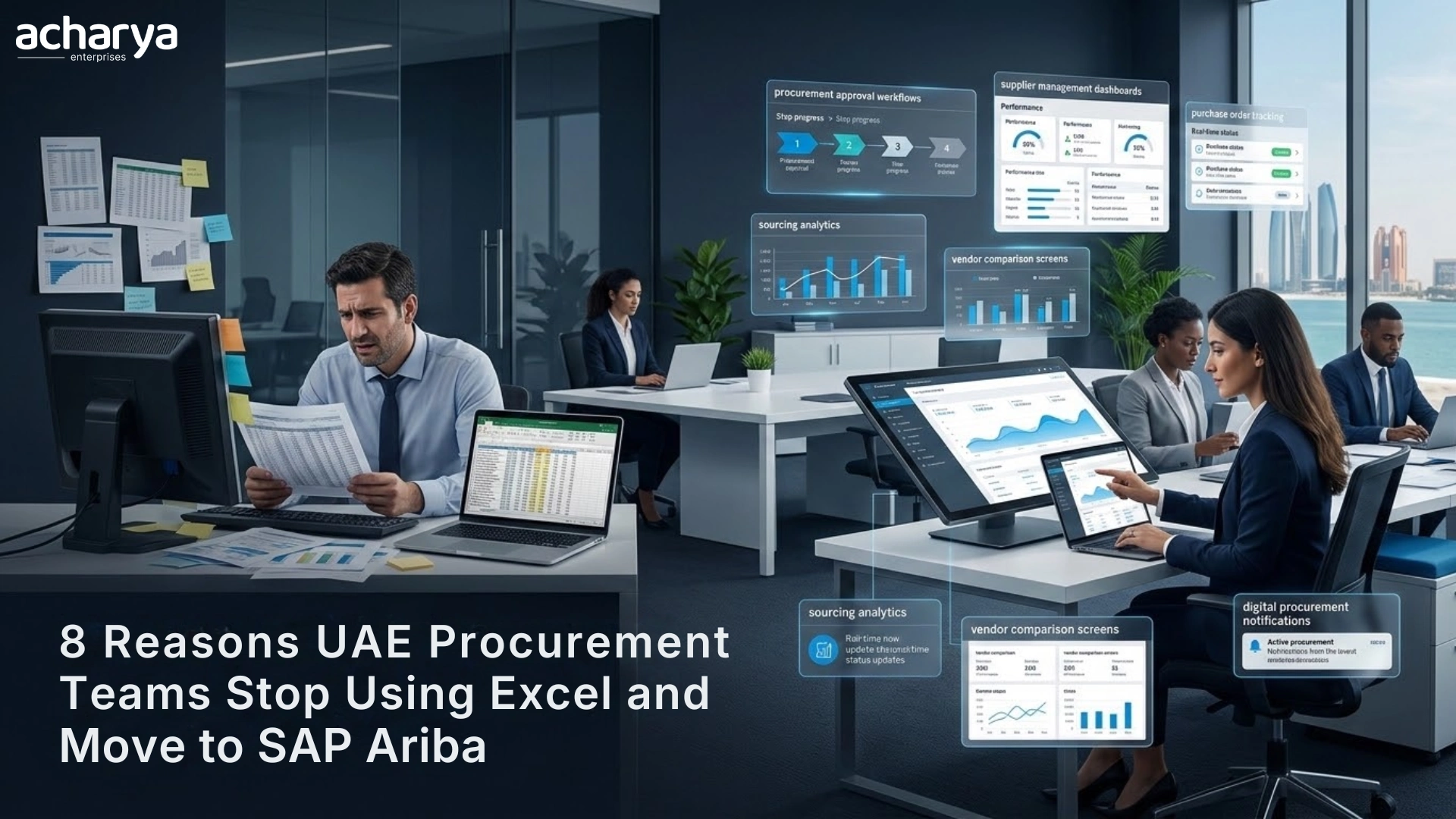
Procurement teams in the UAE are moving away from spreadsheets and adopting digital platforms that deliver speed, control, and accuracy. Many organizations have decided to stop using Excel and move to SAP Ariba because spreadsheets cannot keep up with the complexity of modern sourcing and supplier management. The UAE market is growing fast, and companies that rely on manual tools risk falling behind competitors who already use automated procurement systems.
Why Do UAE Procurement Teams Stop Using Excel and Move to SAP Ariba?
UAE procurement teams make the switch to gain automated workflows, better spend visibility, and stronger supplier management. Excel simply cannot match what a dedicated procurement platform delivers at scale.
Research shows that procurement teams waste 60 percent of their time on manual data processing and administrative tasks. That means the majority of the workday goes toward copying numbers, fixing typos, and chasing approvals instead of negotiating better deals or building supplier relationships. A 2024 global report found that nearly half of all procurement errors come directly from manual data entry. For UAE companies processing thousands of purchase orders every month, those errors add up to significant financial losses.
Expo 2020 Dubai used the SAP Ariba platform to connect with more than 25,000 local and global suppliers through a single digital procurement system. That scale of operation would be impossible to manage with spreadsheets alone. Organizations across the UAE are now following the same path.
- Shift from manual spreadsheets to a structured digital platform
- Faster processing and fewer errors compared to Excel workflows
- Centralized control over sourcing, contracts, and supplier data

- Manual Errors in Excel Slow Down Procurement
Excel based procurement leads to frequent mistakes because every number is typed by hand.
Manual data entry carries an error rate between 1 and 5 percent depending on task complexity. A study by PayStream Advisors found that 3.6 percent of invoices processed manually contain mistakes. These errors include duplicate payments, wrong amounts, and missed discounts that cost companies thousands of dollars each month.
- Duplicate entries when multiple users update the same file
- Formula mistakes that go unnoticed until someone checks the numbers
- No built in validation to catch incorrect vendor codes or amounts
- Companies average 50 or more data entry errors every single month
Every error requires time to find and fix. Finance teams spend hours reconciling purchase orders with invoices, and procurement staff waste days chasing corrections. Moving to an automated system eliminates the root cause of these problems by removing manual entry from the process entirely.
- No Real Time Data Visibility Across Teams
Excel files do not provide live updates that multiple teams can access at the same time.
When a procurement officer updates a spreadsheet, nobody else sees the change until the file is saved, emailed, or shared through a cloud folder. This delay creates information gaps. One team might think an order is confirmed while another team still sees it as pending. Version control becomes a constant problem as files get duplicated and renamed across different departments.
- Delayed data sharing between purchasing, finance, and warehouse teams
- No single source of truth for current order or supplier status
- Multiple versions of the same file circulating in email inboxes
- Managers cannot make fast decisions without current information
SAP Ariba UAE companies gain a shared dashboard where every team sees the same data at the same time. Purchasing, finance, and operations all work from one platform instead of passing spreadsheets back and forth. This shared visibility alone transforms how quickly teams respond to issues and approve purchases.
- No Standardized Approval Workflow
Excel cannot enforce structured approval chains that keep procurement processes consistent.
Most procurement teams rely on email chains and phone calls to get purchase approvals. A buyer sends an email, the manager reviews it, forwards it to finance, and finance sends it back with notes. This informal process breaks down easily when someone is out of the office or a message gets buried in an inbox. There is no way to track where an approval sits or how long it has been waiting.
- Approvals handled through email with no tracking or accountability
- No automatic routing based on spend limits or department rules
- Process varies from one buyer to another with no standard approach
- Bottlenecks form when managers are unavailable or traveling
SAP Ariba procurement workflows enforce a consistent approval path for every purchase request. The system routes requests to the right person based on rules the organization sets. Managers approve or reject from their phone or laptop, and the system logs every action with a timestamp. This structure eliminates guesswork and keeps the process moving without manual follow ups.
- Weak Supplier Management Capabilities
Excel does not provide tools to track, evaluate, or communicate with suppliers effectively.
Procurement teams in the UAE work with hundreds of vendors across different categories. Keeping track of supplier contact details, contract dates, performance scores, and compliance certificates in a spreadsheet becomes unmanageable as the vendor list grows. There is no way to alert the team when a contract is about to expire or when a supplier misses a delivery target.
- No supplier scorecards to measure delivery performance or quality
- Vendor data scattered across spreadsheets, emails, and paper files
- No direct communication channel between buyer and supplier
- No automated alerts for contract renewals or certification expirations
SAP Ariba gives procurement teams a centralized supplier database with built in performance tracking. Buyers can rate suppliers, share documents, and collaborate on orders through a single portal. This level of organization makes it easy to identify top performing vendors and address issues with underperforming ones before they impact operations.
- Difficulty Tracking Purchase Orders at Scale
Tracking purchase orders in Excel becomes chaotic as order volume increases.
A small business with a few dozen orders per month might manage with spreadsheets. But midsize and large organizations in the UAE process hundreds or thousands of purchase orders every month. Each order has multiple line items, delivery dates, receipt confirmations, and invoice matches. Keeping all of that updated in Excel requires constant manual effort, and any missed update creates a gap in the record.
- Missing status updates when staff forget to log order progress
- No automated notifications when deliveries are late or incomplete
- No connection between purchase orders, receipts, and invoices
- Risk of duplicate orders when team members cannot see what others placed
SAP Ariba tracks every purchase order from creation through receipt and payment in one system. The platform sends automatic alerts when a delivery is delayed or an invoice does not match the original order. This automation removes the need for manual follow ups and ensures nothing falls through the cracks.
- Compliance and Audit Risks Without a Trail
Excel lacks the audit trails and compliance features that regulated industries require.
UAE companies in sectors like government, healthcare, and finance must follow strict procurement regulations. When a procurement team uses spreadsheets, there is no reliable record of who changed what, when, or why. A cell value could be overwritten without any trace. During an audit, this lack of documentation creates serious risk. Auditors cannot verify whether the correct approval process was followed or whether pricing was competitive.
- No record of who made changes to a spreadsheet or when
- No documentation of approval decisions or negotiation history
- Difficult to prove compliance with UAE procurement regulations
- Audit preparation takes weeks of manual file gathering and sorting
SAP Ariba implementation gives organizations a complete digital trail for every transaction. Every approval, modification, and communication is logged with a user name and timestamp. Auditors can review the full history of any purchase in minutes instead of weeks. This capability is especially valuable for UAE public sector organizations that must follow transparent procurement laws.
- No Connection With Finance and ERP Systems
Excel operates as a standalone tool that does not connect to finance or enterprise systems.
Procurement does not exist in isolation. Every purchase order affects budgets, cash flow, and financial reporting. When procurement data lives in spreadsheets, someone must manually transfer numbers into the accounting system. This handoff introduces errors, creates delays, and makes it impossible to get a real time view of spending against budgets. Finance teams often wait days or weeks to see what procurement has committed to.
- Procurement data stored in spreadsheets separate from financial records
- Manual data transfer between systems creates timing gaps
- No way to match purchase commitments against budget in real time
- Inconsistent records between procurement and finance cause disputes
SAP Ariba integration connects the procurement platform directly with finance and ERP systems. When a purchase order is approved in Ariba, it automatically updates the budget and creates the corresponding record in the financial system. This seamless flow eliminates manual data entry between departments and gives leadership an accurate picture of company spending at any moment.
- No Advanced Analytics or Spend Insights
Excel cannot deliver the deep spend analytics that procurement teams need to negotiate better deals.
Understanding where money goes is the foundation of smart procurement. Excel can sort and filter data, but it cannot automatically classify spending across categories, identify savings opportunities, or highlight suppliers charging above market rates. Procurement teams that rely on spreadsheets often have limited visibility into their own spending patterns. They cannot answer basic questions like how much they spent with a specific vendor last year or which category offers the biggest savings potential.
- Basic reporting capabilities compared to modern analytics platforms
- No automatic spend classification across categories or suppliers
- No visibility into maverick spending or contract leakage
- Decisions based on incomplete data instead of full spend picture
SAP Ariba provides built in spend analytics that classify every transaction, track savings from negotiations, and benchmark supplier pricing against market data. Procurement leaders gain the insights they need to consolidate spending, negotiate better contracts, and demonstrate value to the business. Organizations using Ariba report measurable cost reductions within the first year of going live.
Key Takeaways
- UAE procurement teams stop using Excel and move to SAP Ariba to eliminate manual errors and speed up workflows
- Sixty percent of procurement time is wasted on manual tasks that automation can handle
- SAP Ariba provides real time visibility, standardized approvals, and complete audit trails
- Supplier management, purchase order tracking, and spend analytics all improve with a dedicated platform
- Integration with finance and ERP systems eliminates data silos and gives accurate spending visibility