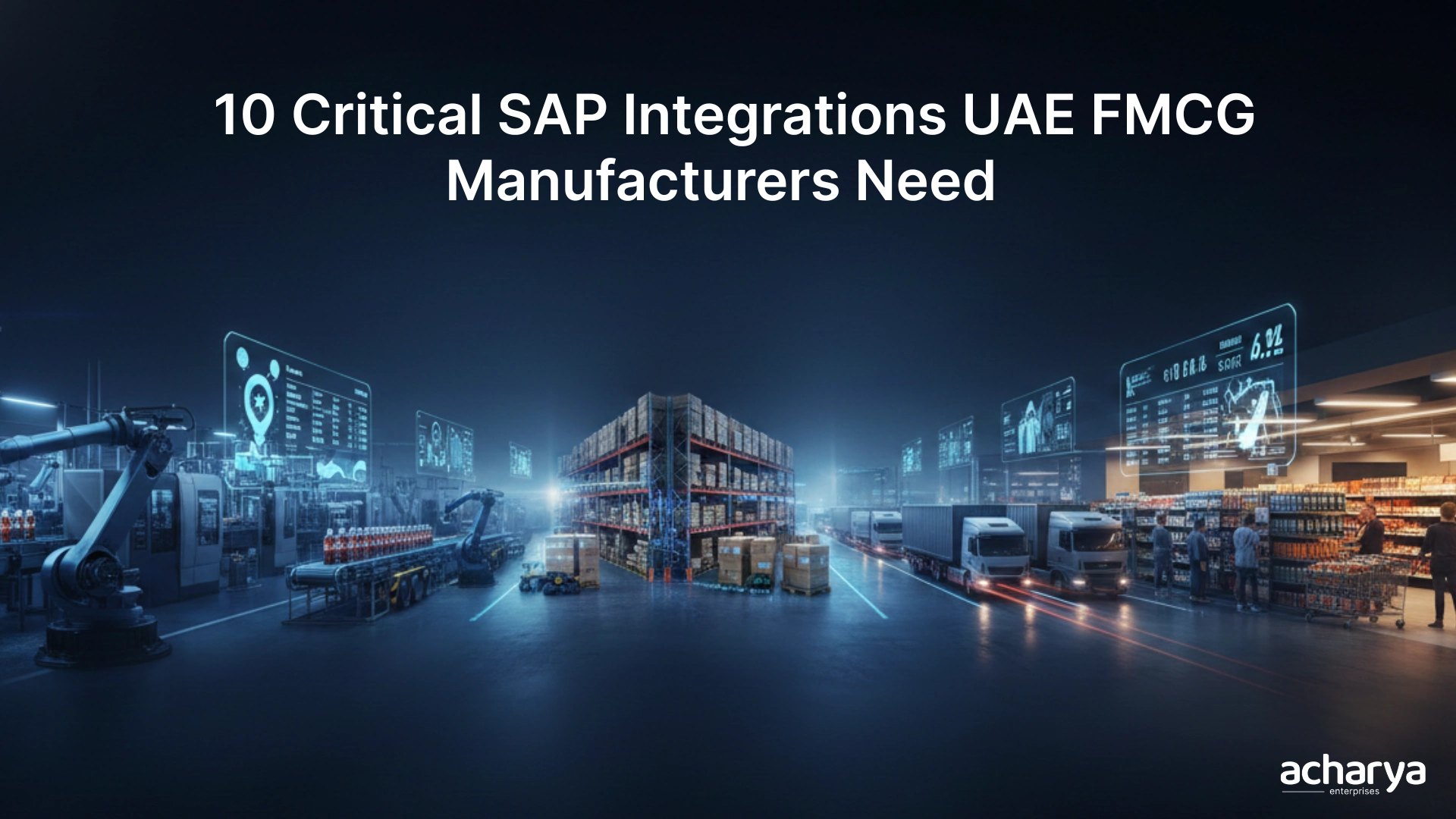
10 Critical SAP Integrations UAE FMCG Manufacturers Need (From Factory to Retail Shelf)
SAP integrations UAE FMCG manufacturers rely on connecting every link from raw materials to the retail shelf. The UAE FMCG market grew 6.8% in 2025 with e-commerce driving up to 18% of category sales. Disconnected systems cause stockouts, overstocking and shipment delays. Integrated SAP environments give leaders accurate live data across the value chain.
SAP integrations UAE FMCG manufacturers must implement
Ten critical SAP integrations UAE FMCG manufacturers need are production systems, warehouse management, distributor portals, retail POS, e-commerce platforms, logistics providers, supplier networks, quality systems, finance platforms, and analytics tools.
- Production and shop floor integration
Manufacturing data must flow directly into SAP for accurate cost tracking and yield measurement. Connected systems give plant managers live visibility into output. Studies show integrated shop floor systems can improve output by 15 to 25%.
- Factory floor data feeds into SAP automatically
- Live batch tracking and yield reporting
- Production schedules linked to demand signals
- Warehouse management integration
Inventory accuracy is critical in FMCG where thousands of SKUs have tight shelf life windows. With SAP Business One inventory management, warehouse operations connect to the central ERP for multi location stock tracking. Smart warehousing systems that integrate with SAP cut picking errors by up to 60%.
- Real time stock visibility across warehouses
- Batch and expiry date tracking
- Automated stock movements and replenishment
- Distributor and channel partner integration
Distributors are the backbone of FMCG reach in the UAE covering modern trade and convenience stores. SAP integration ensures seamless order flow between manufacturers and their distribution network. Centralized systems give brands visibility into secondary sales data that was previously invisible.
- Order capture and processing from distribution partners
- Secondary sales visibility across channels
- Credit and payment tracking per partner
- Retail POS integration
Retail sales data drives accurate demand planning for FMCG manufacturers. POS integration brings consumption data directly from store checkouts into SAP. Companies with real time POS data feeding into planning systems see up to 35% improvement in supply chain efficiency.
- Store level sales data in real time
- Demand signals for production planning
- Promotion performance measurement
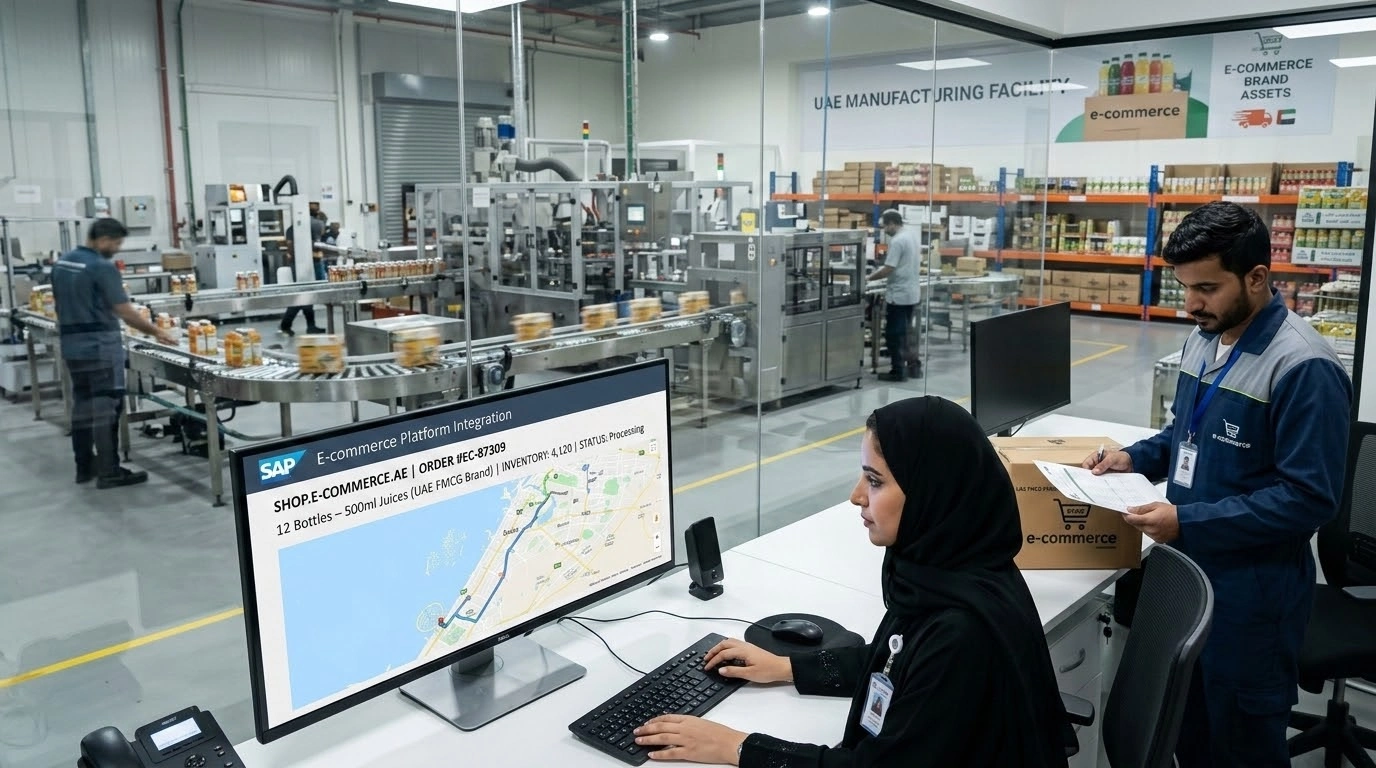
- E commerce platform integration
Online grocery channels are growing fast in the UAE with e-commerce contributing up to 18% of FMCG sales. SAP must connect with digital storefronts to manage orders payments and customer data. Integrated systems streamline the order to cash cycle across channels.
- Order management from web storefronts
- Payment tracking and reconciliation
- Customer data synchronization across channels
- Logistics and transport integration
Delivery speed directly impacts retailer satisfaction and shelf availability. SAP integration with logistics systems gives full visibility into shipments routes and delivery confirmations. Disconnected logistics delay fulfillment beyond acceptable timelines.
- Shipment tracking from warehouse to retailer
- Route optimization for faster delivery
- Proof of delivery confirmations in SAP
- Supplier and procurement integration
Raw material supply must stay synchronized with production schedules to avoid factory downtime. SAP Ariba integration transforms procurement by connecting manufacturers with suppliers on a unified digital platform. The platform automates purchase orders, tracks vendor performance and reduces sourcing cycle times significantly.
- Supplier order management and automation
- Purchase order processing and vendor matching
- Vendor performance and compliance tracking
- Quality management system integration
Product quality is non-negotiable in FMCG where consumer trust depends on consistent standards. SAP must integrate with quality systems to capture inspection data and ensure batch traceability from raw material to finished goods. Full traceability is essential for compliance and recall management.
- Quality inspection data flowing into SAP
- Batch traceability across the supply chain
- Compliance tracking and audit readiness
- Finance and billing integration
Revenue visibility depends on connecting financial systems with operational data. SAP finance integration ensures invoicing cost allocation and profitability tracking happen in real time. Shared data lets companies close books faster and report margins with accuracy.
- Real time invoicing and billing
- Cost allocation by product and channel
- Profitability tracking per SKU
- Analytics and demand planning integration
Data driven decisions require analytics tools connected to SAP. Integrated demand forecasting uses historical sales patterns and seasonal data to predict what consumers will buy next. Research shows demand forecasting improvements can reduce supply chain costs by up to 20%.
- Demand forecasting with predictive models
- Sales trend analysis and reporting
- Scenario planning for market changes
Companies running SAP S/4HANA cloud gain built in analytics that turn supply chain data into actionable insights.
Key Takeaways
- The UAE FMCG market grew 6.8% in 2025 driven by e commerce growth
- Disconnected systems cause stockouts overstocking and delayed shipments across the value chain
- The core integrations cover production warehouse distribution retail and analytics
- Real time data from POS and distributor portals improves demand forecasting accuracy
- Companies using integrated SAP environments report up to 35% better supply chain efficiency