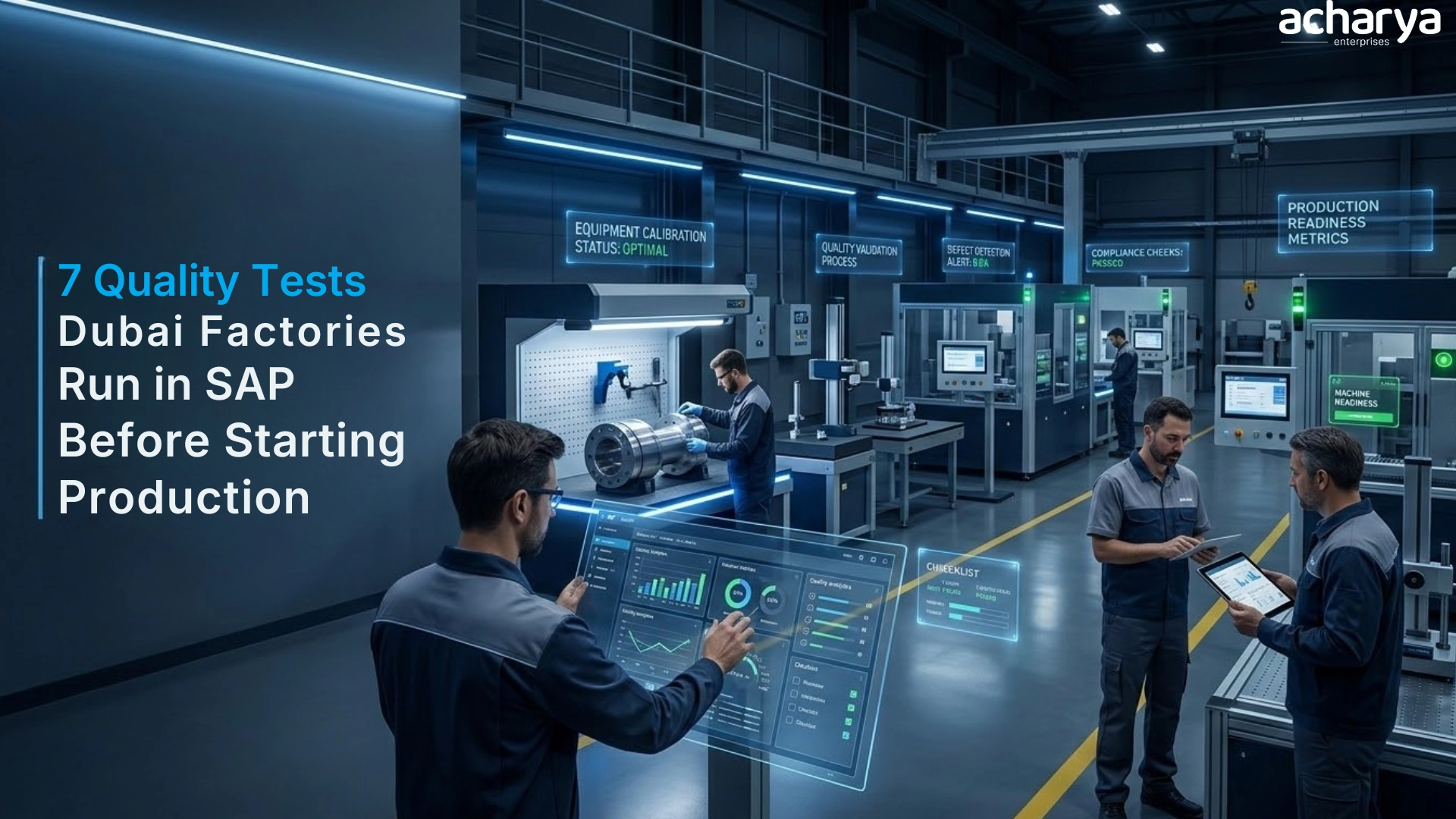
7 Quality Tests Dubai Factories Run in SAP Before Starting Production
Quality tests Dubai factories run in SAP before starting production help manufacturers catch defects early and avoid costly rework. Manufacturing contributes 15% to UAE GDP and over 4,000 factories operate across Dubai free zones today. Running quality checks inside a single platform means every team works from the same data and follows the same standards. This article covers the seven most important pre production quality checks and explains how each one protects output and profit.
What Are the Quality Tests Dubai Factories Run in SAP Before Starting Production?
Dubai factories use SAP to run seven pre production quality checks including material inspection, specification matching, supplier certification validation, equipment calibration, process verification, safety compliance review, and sample testing. These tests catch problems before manufacturing begins and reduce waste by up to 30%.
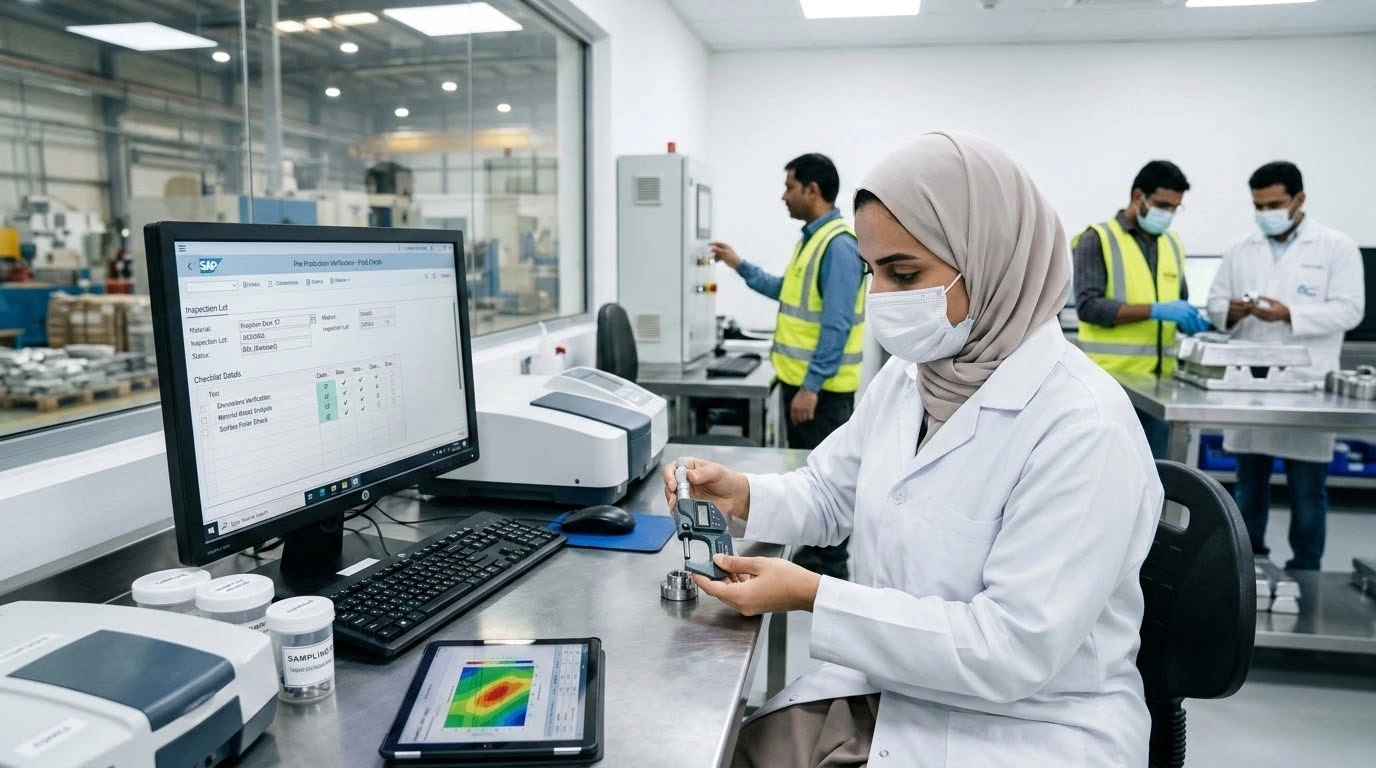
- Raw Material Quality Inspection
SAP checks incoming raw materials against quality standards before they reach the production floor. This step prevents defective inputs from entering the assembly line and causing larger problems downstream.
- Incoming material batches are scanned and logged automatically in the system
- Each batch receives a pass or fail result based on set quality criteria
- Materials that fail the inspection are quarantined right away for review
- Approved materials move forward without manual paperwork delays
Many UAE factories that run sap erp report a 25% drop in material rejection rates after switching from manual inspection logs to automated quality checks inside the system.
- Material Specification Verification
SAP verifies that every material matches the exact specification required for the product. This check covers dimensions, composition, grade, and tolerance levels defined in the material master record.
- Specifications are stored centrally in the material master data for easy access
- The system flags any mismatch between ordered and received items instantly
- Teams can view tolerance levels on their dashboard without extra reports
- Incorrect materials are blocked before production ever starts on the line
Factories running SAP on their shop floors save an average of 4 hours per batch by eliminating manual specification cross checking between departments.
- Supplier Quality Certification Check
SAP validates that suppliers hold current quality certifications before any material is accepted. This step reduces supply chain risk and ensures every vendor meets industry and regulatory standards.
- Supplier certification status is tracked inside the vendor master record
- Expired certificates trigger automatic alerts to the procurement team
- Only certified suppliers appear in the approved vendor list for ordering
- Quality teams can audit supplier history from a single dashboard view
Many sap dubai implementation partners recommend connecting the vendor master directly to external certification databases for live validation during goods receipt processing.
- Equipment Calibration and Readiness Test
SAP checks that all production machines are calibrated and maintained before a run begins. Uncalibrated equipment leads to defective output, wasted materials, and potential safety hazards on the factory floor.
- Calibration dates are logged against each machine in the system permanently
- Overdue calibration automatically triggers a maintenance work order
- Equipment must show a ready status before the production order releases
- Historical calibration data supports internal and external audit requirements
Factories using SAP S/4HANA cloud can connect calibration sensors directly to the platform for live readings and automatic status updates without any manual data entry.
- Production Process Validation
SAP validates that every step in the production process follows the approved workflow and quality criteria. This ensures consistent output across shifts, production lines, and operator teams.
- Work instructions are linked directly to each production order in the system
- Operators must confirm each step before moving to the next one
- Deviations from the standard process are recorded automatically for review
- Quality checkpoints are built into the routing at predefined stages
Companies pursuing SAP business transformation often start with process validation because it delivers the fastest return on investment by reducing variation and rework from day one.
- Safety and Regulatory Compliance Check
SAP verifies that all safety protocols and regulatory requirements are met before production starts. This protects workers on the floor and ensures the factory meets local and international standards.
- Safety checklists are integrated into the production release workflow
- Regulatory requirements are mapped to specific product categories in the system
- Compliance failures block the production order until the issue gets resolved
- Documentation is generated automatically for inspection and audit purposes
Dubai Industrial City hosts more than 750 manufacturing companies and requires every facility to maintain current compliance documentation. SAP helps factories stay audit ready at all times by keeping records organized and accessible.
- Pre Production Sample Testing
SAP records and evaluates sample outputs from the first production run before full scale manufacturing begins. This final gate catches any remaining issues and confirms the entire process produces acceptable results.
- Sample inspection results are entered directly into the system by quality staff
- Statistical process control charts track sample quality trends over time
- A usage decision determines whether production can proceed or must stop
- Sample data is stored for future reference and compliance audit trails
Leading Dubai manufacturers use sample testing results to adjust machine settings and material mixes before committing to a full production batch. This approach saves both time and raw materials on every new production run.
Key Takeaways
- Running quality tests before production prevents defects and reduces material waste by up to 30%
- SAP provides a single platform for material, equipment, process, and compliance checks
- Dubai factories using SAP quality management report fewer rework cycles and higher customer satisfaction
- Automated quality checks remove manual errors and speed up the production release process
- Pre production sample testing acts as the final safety gate before full scale manufacturing begins