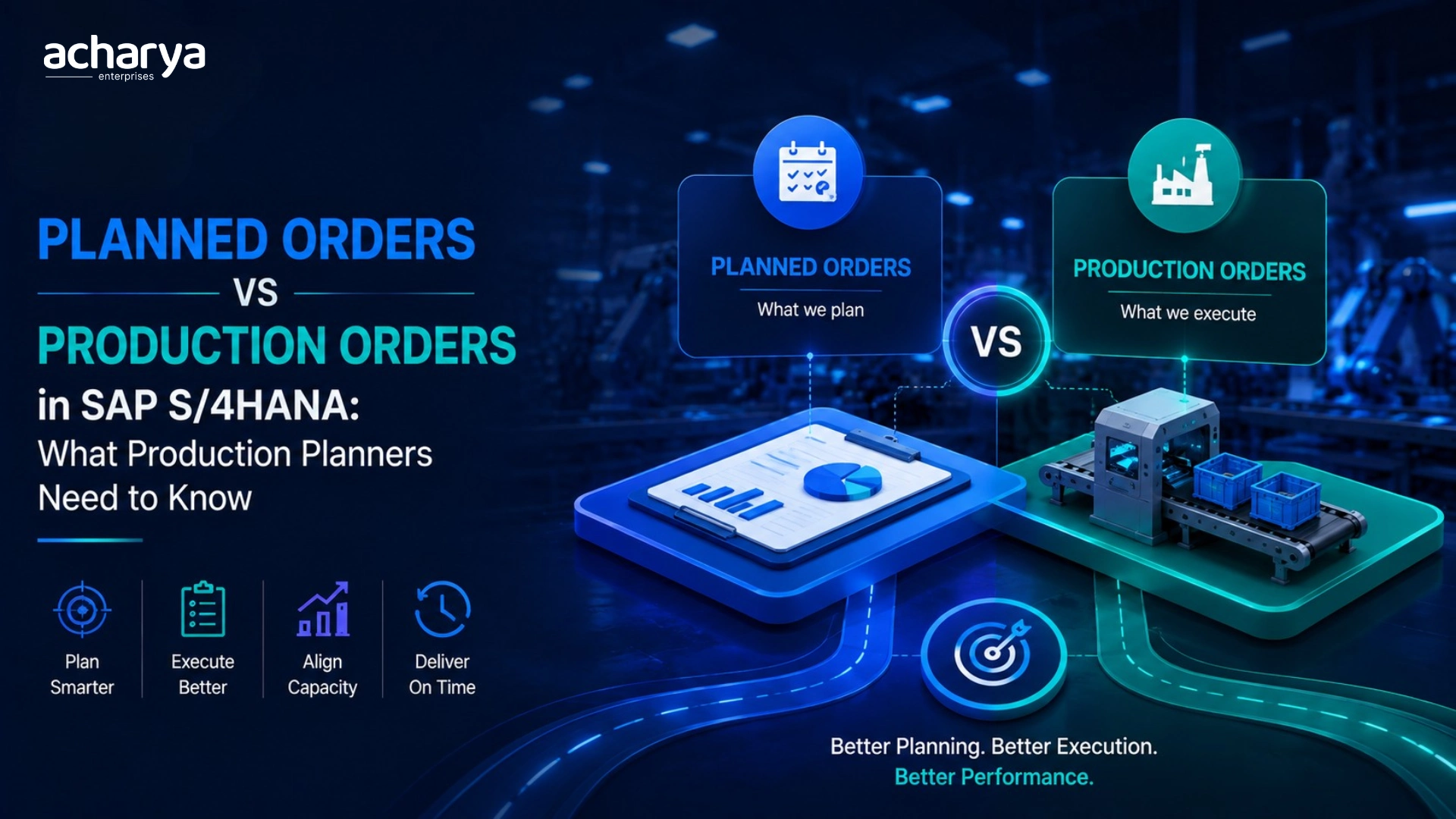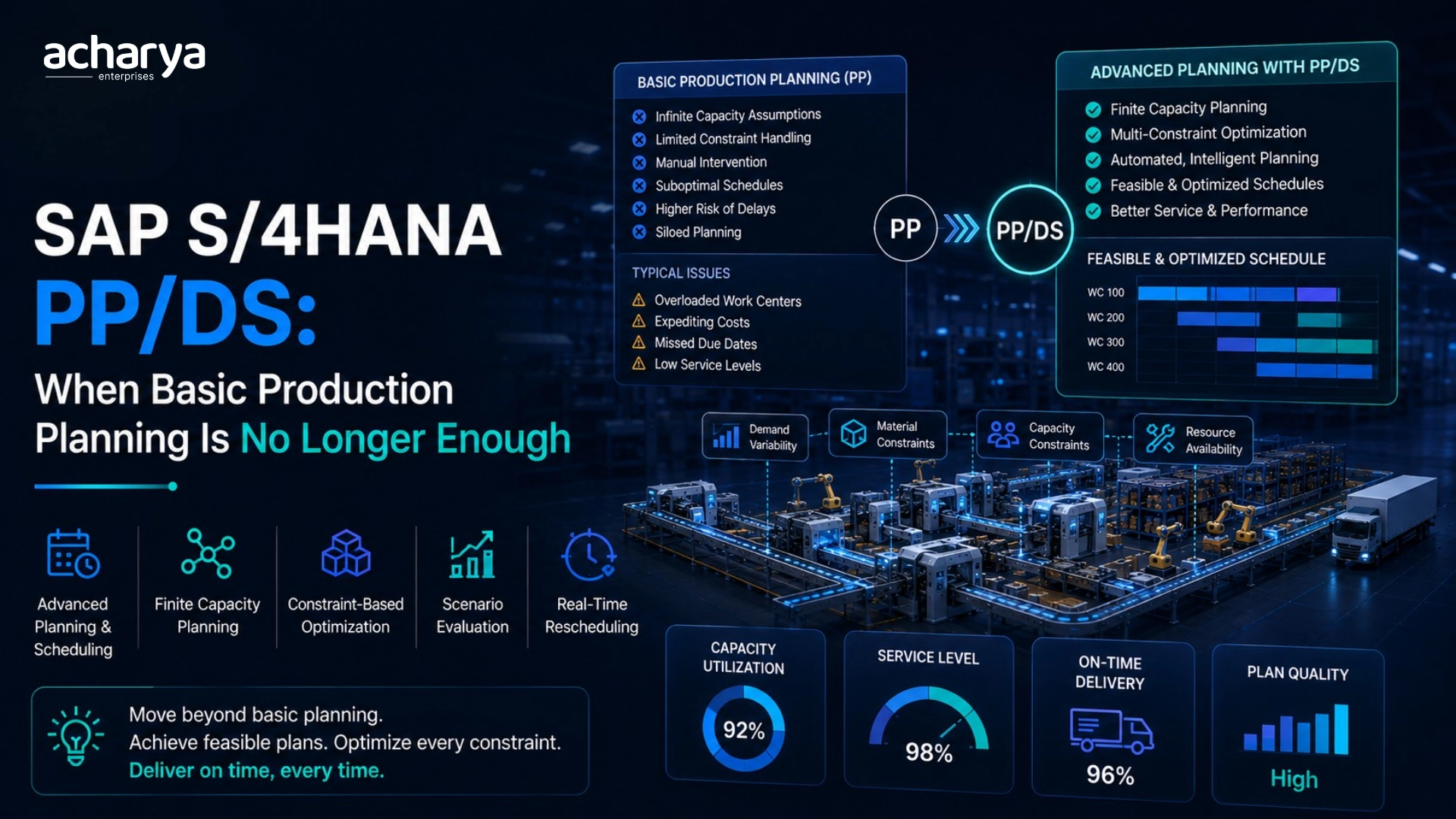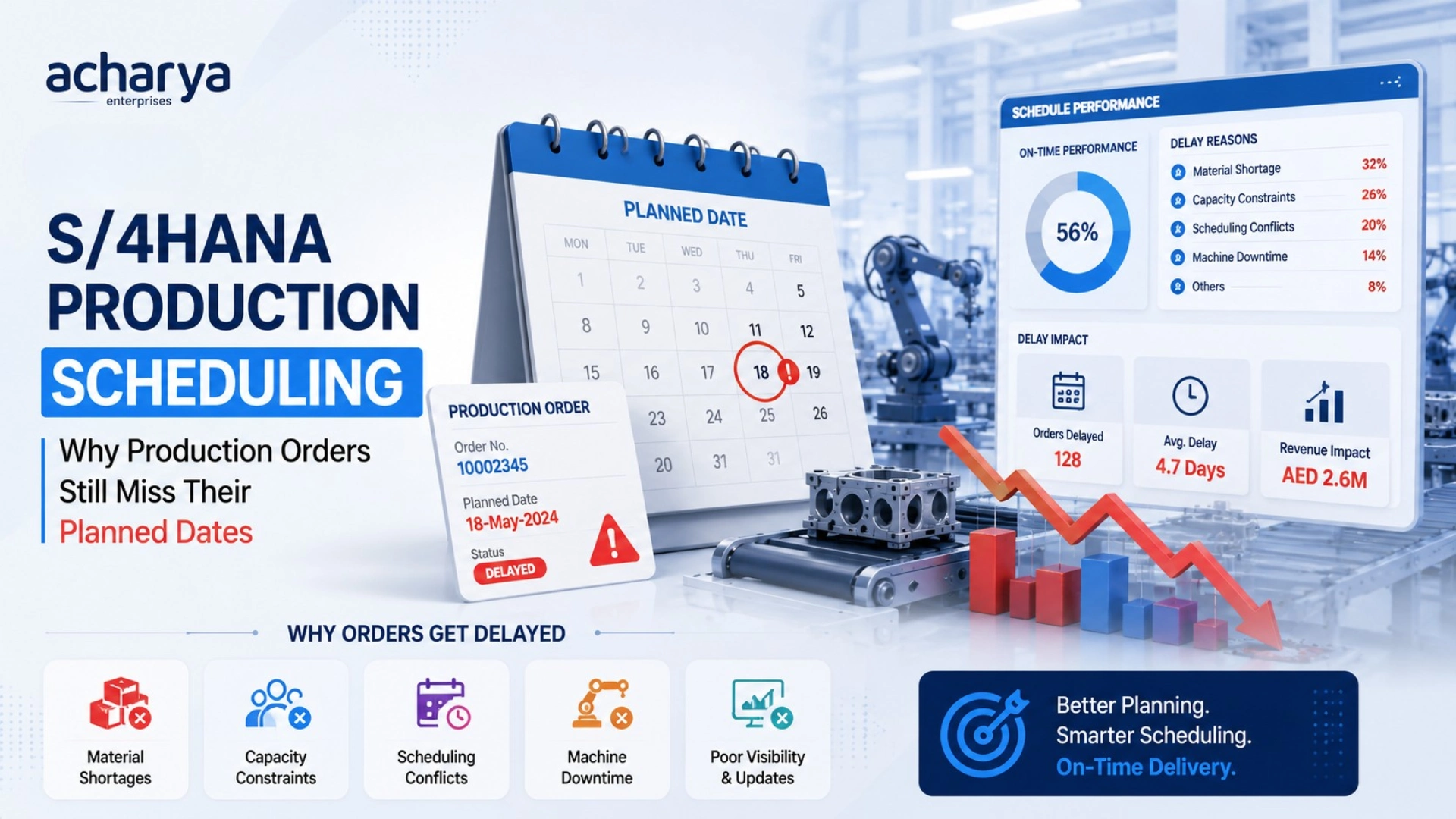
What Is Shop Floor-to-Planning Connectivity in SAP S/4HANA?
Connect shop floor to planning SAP means linking real production activity with planning decisions so factory teams can act on current data, not delayed reports.
UAE manufacturers often lose planning accuracy because shop floor data reaches planning teams too late. SAP S/4HANA helps connect production activity, material usage, inventory, quality, procurement, and planning decisions in one system.
In UAE factories across Dubai Industrial City, Jebel Ali, Abu Dhabi, Sharjah, and Ras Al Khaimah, a one-shift delay can affect raw material planning, customer delivery, overtime cost, and AED margin control.
For a wider manufacturing view, S/4HANA for UAE manufacturing fits naturally here.
Why Shop Floor Visibility Matters for UAE Manufacturers
Shop floor visibility matters because production planners need current information on output, delays, materials, quality issues, and capacity before they adjust plans.
If planning teams cannot see what is happening on the line, they may release the wrong schedule, overcommit delivery, or trigger unnecessary procurement.
For UAE manufacturers serving retail, FMCG, packaging, automotive, food, chemicals, and industrial customers, this affects service levels and working capital.
Key insight: Planning accuracy depends on how quickly factory reality reaches the planning system.
What Happens When Shop Floor and Planning Teams Are Disconnected?
When shop floor and planning teams are disconnected, production plans become outdated before they are executed.
The shop floor may know that a machine is down, a batch failed quality inspection, or a material was consumed faster than expected.
But if planning still works from yesterday’s update, procurement and delivery teams make decisions from stale information.
Common outcomes include:
- Late production schedule changes
- Wrong material requirement signals
- Higher emergency buying
- Missed customer delivery dates
- Excess WIP or finished goods
- Manual calls between planners and supervisors
What Does Shop Floor-to-Planning Connectivity Mean?
Shop floor-to-planning connectivity means production execution data flows back into planning, inventory, procurement, and delivery decisions.
It connects what was planned with what is actually happening.
This includes production order status, operation confirmations, goods issue, goods receipt, material consumption, quality holds, downtime signals, and inventory updates.
In practical terms, production planning SAP becomes stronger when planners can see real factory constraints before they update the schedule.
How SAP S/4HANA Connects Factory Operations With Planning
SAP S/4HANA connects factory operations with planning by linking production orders, material movements, confirmations, inventory updates, and planning requirements.
SAP’s official manufacturing page says SAP S/4HANA Manufacturing helps streamline planning and shop floor operations for production environments.
SAP learning content also explains that production order confirmations are the basis for progress control and cost charging of internal activities.
That means shop floor confirmations are not just activity records. They are planning, inventory, and cost signals.
Step 1: Capture Real-Time Production Status From the Shop Floor
Real-time production status should be captured so planners can see whether work is released, running, delayed, partially complete, or finished.
This is where real-time shop floor data SAP becomes important.
A shift supervisor may confirm an operation, report partial completion, or flag a delay. That update can help planning teams understand whether the next order can start on time.
For UAE plants running multiple shifts, this reduces morning surprises and late corrective planning.
Step 2: Link Machine Output With Production Orders
Machine output should be linked with production orders so planners can compare actual output with planned production quantities.
If output is below plan, the issue may be downtime, speed loss, material shortage, quality rejection, or operator constraint.
Without order-level visibility, planners only see that production is behind.
With SAP S/4HANA production execution, production orders become the reference point for output, confirmations, material use, and cost activity.
Step 3: Track Material Consumption Against Planned Requirements
Material consumption should be tracked against planned requirements so shortages, overuse, and planning errors become visible earlier.
Factories often discover material gaps too late because consumption is updated after production or by manual entry.
If actual consumption exceeds the plan, procurement and planning teams need to know quickly.
When covering the plan that drives the floor, MRP Live in SAP S/4HANA is relevant because MRP Live supports more current material planning and reduces the danger of planning with obsolete data.
Step 4: Update Inventory Availability Automatically
Inventory availability should update automatically when materials are issued, consumed, received, or moved during production.
Delayed inventory updates create a false view of what is available.
A planner may think material is still in stock, while the shop floor has already consumed it. A warehouse may show finished goods late, while delivery teams wait for confirmation.
Automatic inventory updates help UAE manufacturers reduce manual reconciliation between warehouse, production, procurement, and sales teams.
Step 5: Flag Delays, Downtime, and Quality Issues Early
Delays, downtime, and quality issues should be flagged early so planning teams can adjust schedules before customer commitments are affected.
A quality hold can block a batch. A machine issue can reduce output. A missing component can stop an order.
If these issues are visible only after the shift, planners lose valuable response time.
Early flags support better decisions such as resequencing orders, reallocating materials, changing delivery dates, or triggering procurement action.
Step 6: Adjust Production Plans Based on Real-Time Factory Data
Production plans should adjust based on real-time factory data so schedules reflect actual capacity, constraints, and material availability.
This is where shop floor control and planning need to work together.
A plan may look perfect on paper but fail when a line is unavailable, a supplier shipment is delayed, or labor availability changes.
SAP S/4HANA helps planners compare planned output with actual execution signals and revise schedules with stronger confidence.
Step 7: Connect Planning Changes With Procurement and Delivery Timelines
Planning changes should connect with procurement and delivery timelines so material buying and customer commitments stay aligned.
If the production plan changes but procurement does not know, materials may arrive too early, too late, or in the wrong quantity.
If delivery teams do not know, customers may receive unrealistic dates.
This connection helps how to integrate the shop floor with SAP become a business issue, not just a system integration question.
How SAP S/4HANA Helps Reduce Production Delays
SAP S/4HANA helps reduce production delays by making production status, material issues, and planning changes more visible to the right teams.
Delays are not always caused by the shop floor.
They can come from late procurement, wrong master data, poor scheduling, inventory mismatch, or quality issues.
When these signals are connected, planners can act earlier and reduce the need for firefighting.
How Real-Time Shop Floor Data Improves Inventory Planning
Real-time shop floor data improves inventory planning by showing actual material consumption, production output, and stock movement sooner.
Inventory planning becomes more accurate when planners know what the factory has actually consumed and produced.
This supports better reorder decisions, fewer emergency purchases, and lower excess stock.
Execution data also feeds cost understanding, which is why real-time production costing connects naturally when production activity affects margin visibility.
Common Shop Floor Planning Gaps SAP S/4HANA Helps Close
SAP S/4HANA helps close planning gaps caused by delayed confirmations, manual inventory updates, weak material visibility, and disconnected production schedules.
Common gaps include:
| Planning gap | Business impact |
| Late production confirmations | Outdated schedules |
| Manual material updates | Wrong stock view |
| No downtime visibility | Missed delivery dates |
| Weak order tracking | Poor planning control |
| Separate cost updates | Delayed margin insight |
| Siloed teams | More firefighting |
For UAE manufacturers, these gaps can increase overtime, urgent buying, and delivery risk.
Final Thoughts: From Delayed Factory Updates to Smarter Manufacturing Planning
SAP S/4HANA helps UAE manufacturers move from delayed factory updates to smarter planning based on real production, inventory, and procurement signals.
Shop floor connectivity is not only about digital screens on the line.
It is about helping production, planning, procurement, warehouse, finance, and delivery teams work from the same operational truth.
Acharya’s Full Implementation + License + Support + Training package can support this through assessment, implementation, data migration, go-live, hypercare, user training, and post-go-live optimization.
Key Takeaways
Shop floor-to-planning connectivity helps UAE manufacturers improve schedule accuracy, inventory control, production responsiveness, and delivery confidence.
- Shop floor delays hurt planning when updates reach teams too late.
- SAP S/4HANA connects production orders, confirmations, inventory, procurement, and planning.
- Real-time production status helps planners respond earlier.
- Material consumption updates improve inventory planning.
- Downtime and quality signals help reduce delivery risk.
- Planning changes should connect with procurement and delivery timelines.
- Clean master data, user training, and controls are essential for reliable execution.