Planned Orders vs Production Orders in SAP S/4HANA: What Production Planners Need to Know
Planned orders help UAE manufacturers prepare future production, while production orders control real shop floor execution in SAP S/4HANA.
For factories in Dubai, Abu Dhabi, Sharjah, Ras Al Khaimah, and UAE free zones, this difference matters because one wrong conversion can create AED cost leakage, material shortages, capacity conflicts, and missed delivery dates.
The goal is simple: planners should know when an order is only a planning proposal and when it becomes a committed manufacturing instruction.
What are planned orders in SAP S/4HANA?
Planned orders are proposal orders created during planning to show what needs to be produced, when it is needed, and which materials may be required.
SAP planned orders are usually created during MRP when demand needs to be covered.
They help planners see future production requirements before the factory is asked to execute them.
What is a planned order in SAP? It is a planning signal, not a shop floor instruction.
The SAP S/4HANA planned order process helps planners review demand, dates, materials, and capacity before deciding what should move forward.
What are production orders in SAP S/4HANA?
Production orders are executable shop floor orders that tell the production team what to make, which materials to consume, which operations to perform, and when to confirm output.
SAP production orders turn planning into factory execution.
A production order can include material components, operations, quantities, dates, work centers, and confirmations.
What is a production order in SAP S/4HANA? It is the order that production teams use to manufacture, consume materials, record progress, and confirm output.
For UAE manufacturers, production orders create stronger control over shop floor activity, material usage, and production accountability.
What is the main difference between planned orders and production orders?
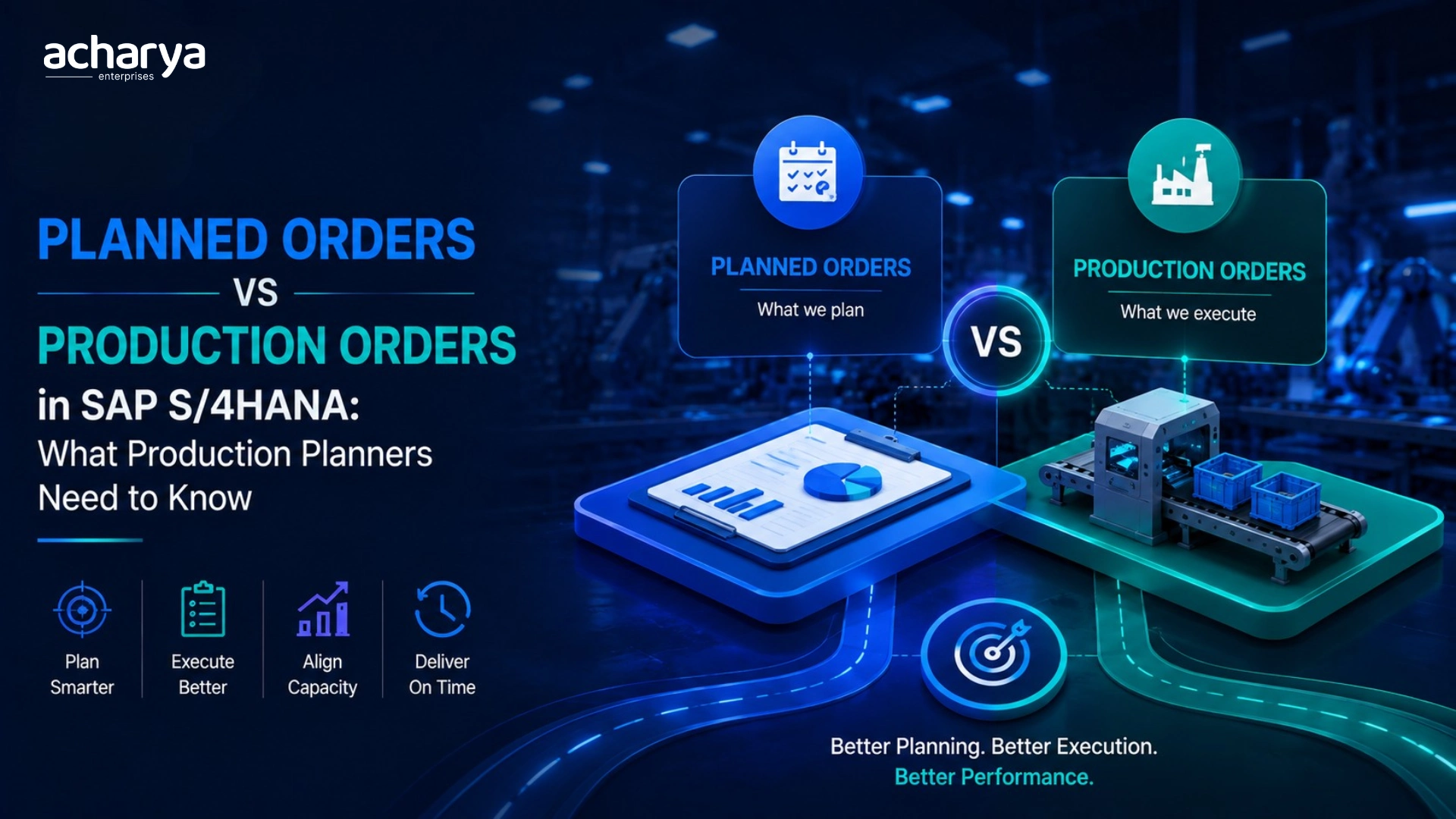
The main difference is that planned orders support planning decisions, while production orders support actual production execution and shop floor control.
Planned order vs production order difference? Planned orders are flexible proposals. Production orders are execution documents.
A simple comparison:
| Area | Planned order | Production order |
| Purpose | Planning proposal | Execution control |
| Created by | MRP or planner | Conversion or manual creation |
| Shop floor use | Not used for execution | Used for production |
| Flexibility | Easier to change | More controlled |
| Impact | Shows future need | Drives real manufacturing |
The Difference between planned order and production order SAP is important because converting too early can lock the plant into an unrealistic plan.
Why do production planners need both planned orders and production orders?
Production planners need planned orders to check future demand and capacity, and production orders to release confirmed work to the plant.
Planners need both because production does not move from demand to execution in one step.
Planned orders help teams review what might be needed. Production orders help teams execute what has been confirmed.
SAP PP orders give planners a structured way to move from planning visibility to shop floor control.
For the data foundation behind order creation, production master data required for order creation fits naturally here.
When does a planned order become a production order?
A planned order becomes a production order when the planner converts it after checking material availability, capacity, dates, and production feasibility.
Convert planned order to production order SAP is a key control point.
Before conversion, planners should confirm that the order is realistic, not only required.
If the order is converted without checking material and capacity, the factory may receive work it cannot complete on time.
SAP Help confirms planned orders can be converted into production orders, and SAP Help also notes that material components in the planned order can be copied during conversion.
How does MRP create planned orders in SAP S/4HANA?
MRP creates planned orders when demand exists and SAP identifies that stock, purchase receipts, or existing production orders cannot cover the requirement.
MRP checks demand against available supply.
If the system sees a gap, it can create a planned order as a proposal to produce the required quantity.
What happens after planned order creation in SAP? The planner reviews the proposal, checks feasibility, and decides whether to change, delay, convert, or delete it.
This supports the complete manufacturing flow described in complete SAP S/4HANA PP process
What should planners check before converting planned orders?
Planners should check material availability, BOM accuracy, routing, work center capacity, production version, lead time, and delivery priority before conversion.
How to convert planned order to production order? The technical step is only one part of the decision.
The business check matters more.
Key checks include:
- Material availability
- BOM accuracy
- Routing validity
- Work center capacity
- Production version
- Lead time
- Quality or release status
- Customer delivery priority
If these checks are skipped, SAP manufacturing orders may look correct in the system but fail on the shop floor.
Why do production orders still get delayed after conversion?
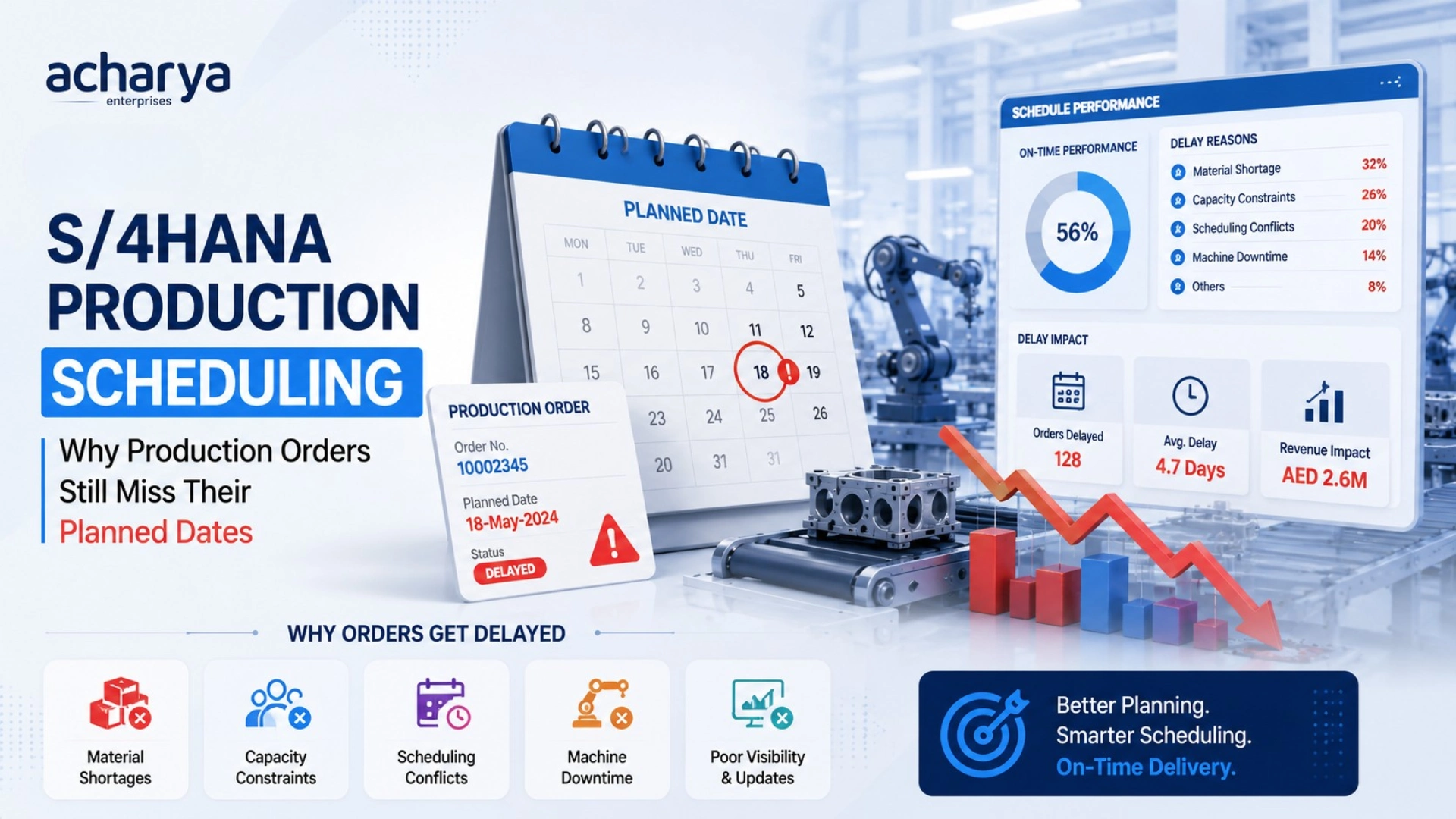
Production orders get delayed when the planned order was converted with wrong dates, missing materials, overloaded capacity, or outdated master data.
How does SAP create production orders? It can create them through planned order conversion or manual creation, depending on the process.
But creation does not guarantee readiness.
Production can still be delayed if the planner converted the order too early, ignored a shortage, used wrong routing times, or missed capacity overload.
For deeper delay causes, production order scheduling challenges fits naturally here.
How do planned orders and production orders affect inventory and procurement?
Planned orders show future material demand, while production orders create firm requirements that procurement, inventory, and production teams must act on.
SAP manufacturing order management affects more than production.
Planned orders help procurement and inventory teams see possible future demand. Production orders make the requirement more serious because production is preparing to execute.
For UAE manufacturers with imported materials, free-zone warehouses, and multi-plant supply, this visibility helps avoid late buying, wrong stock transfers, and emergency procurement.
SAP order management becomes stronger when planners understand which demand is tentative and which demand is confirmed for execution.
How can UAE manufacturers improve planned order to production order control?
UAE manufacturers can improve control by cleaning master data, reviewing MRP settings, using realistic lead times, monitoring shortages, and training planners on conversion discipline.
Planned orders vs production orders in SAP S/4HANA should not be treated as only an SAP transaction topic.
It is a planning governance topic.
UAE manufacturers should define who can convert planned orders, what must be checked first, and when production orders should be released.
Acharya’s Full Implementation + License + Support + Training package fits this need because planned-to-production order control depends on assessment, implementation, data migration, go-live support, hypercare, security controls, and user training.
Key Takeaways
Planned orders and production orders help UAE manufacturers separate future production planning from actual shop floor execution.
- Planned orders are planning proposals.
- Production orders are executable shop floor orders.
- MRP can create planned orders when demand is not covered.
- Planners convert planned orders only after checking feasibility.
- Production orders drive material consumption, operations, confirmations, and control.
- Delays happen when conversion happens with poor data or unrealistic dates.
- Clean BOMs, routings, work centers, and production versions improve order accuracy.
- UAE manufacturers should train planners on conversion discipline.
Improve Planned Order to Production Order Control
If your UAE manufacturing team converts planned orders too early, releases production orders with shortages, or struggles to explain order delays, the next step is a SAP S/4HANA production planning readiness review.
Acharya Enterprise can help assess your planning data, MRP settings, production order process, user adoption, and controls so production planners can move from proposal to execution with more confidence.