SAP S/4HANA Production Planning Master Data: BOMs, Routings, Work Centers, and Production Versions
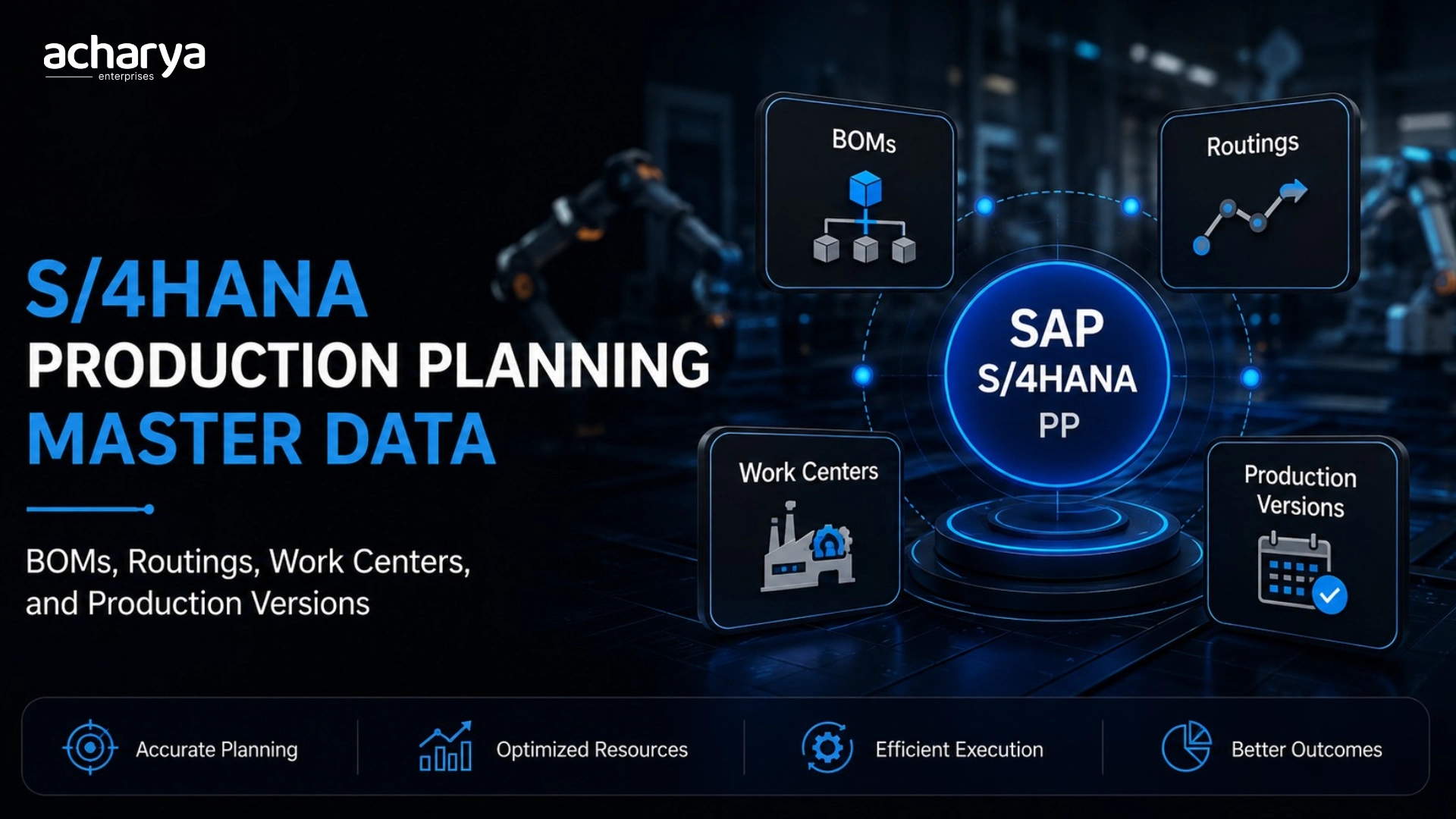
SAP S/4HANA Production Planning master data is the foundation that tells a manufacturing system what to make, which materials to use, where production happens, and how each product should be produced.
For UAE manufacturers, weak master data can create AED cost leakage through wrong material planning, poor scheduling, production delays, excess stock, and inaccurate capacity decisions.
This is especially important for factories across Dubai, Abu Dhabi, Sharjah, Ras Al Khaimah, and UAE free zones where multi-plant operations, supplier lead times, and customer delivery commitments must stay aligned.
For the wider planning structure, SAP S/4HANA production planning framework gives useful context before going deeper into master data.
What is SAP S/4HANA Production Planning master data?
SAP S/4HANA Production Planning master data defines the information needed to plan, schedule, and execute manufacturing processes. It includes BOMs, routings, work centers, and production versions that help manufacturers create accurate production plans.
For teams asking What is master data in SAP S/4HANA PP?, the simplest answer is this: it is the planning foundation behind every reliable production decision.
If the master data is wrong, the production plan will also be wrong.
The most important elements are:
- BOMs that define material structure
- Routings that define production steps
- Work centers that define where work happens
- Production versions that connect valid BOM and routing combinations
SAP S/4HANA master data must be treated as a business control, not only an IT setup task.
Why is master data important in SAP S/4HANA Production Planning?
Master data is important because it controls planning accuracy, material availability, production scheduling, capacity visibility, and manufacturing consistency.
The Importance of master data in SAP production planning becomes clear when a factory faces repeated planning errors.
A wrong component quantity can trigger shortages. An outdated routing can create unrealistic schedules. An incorrect work center capacity can overload one production line while another stays underused.
For UAE manufacturers, this affects customer delivery, inventory cost, finance reporting, and plant productivity.
SAP PP master data helps create one trusted planning base across production, procurement, warehouse, finance, and shop floor teams.
What are Bills of Materials (BOMs) in SAP S/4HANA Production Planning?
Bills of Materials, or BOMs, define the components and quantities required to manufacture a finished or semi-finished product.
A SAP BOM shows what raw materials, packaging items, subassemblies, and components are needed for production.
For a UAE food, packaging, FMCG, chemical, automotive, or industrial manufacturer, the BOM directly affects material planning, procurement, inventory, and product costing.
If the BOM says the wrong quantity, the system may plan too much or too little material.
This is why SAP S/4HANA BOM management for manufacturing must include ownership, version control, approvals, and regular review.
How do BOMs improve production planning in SAP S/4HANA?
BOMs improve production planning by giving SAP S/4HANA the correct material structure for MRP, production orders, inventory planning, and cost calculation.
What is BOM in SAP production planning? It is the list of materials needed to make a product.
When BOM data is clean, material requirements planning can calculate the right components more accurately.
This helps reduce:
- Missing raw materials
- Wrong component reservations
- Excess inventory
- Production order corrections
- Costing errors
- Manual planning checks
For UAE factories managing imported raw materials or supplier lead times, clean BOMs help reduce the risk of discovering shortages too late.
What are routings in SAP S/4HANA Production Planning?
Routings define the sequence of manufacturing operations needed to produce a product, including the steps, resources, and expected production times.
A SAP routing tells the system how a product moves through production.
It may include cutting, mixing, filling, assembly, inspection, packaging, or final processing, depending on the industry.
How do routings impact SAP production planning? They influence scheduling, capacity planning, labor planning, machine use, and production order timing.
If routing data is outdated, planners may schedule work based on a process that no longer reflects the factory floor.
How do routings help manufacturers optimize production processes?
Routings help manufacturers optimize production processes by standardizing operation sequences, improving scheduling accuracy, and supporting better resource planning.
Routings create consistency.
If two shifts produce the same product differently, production time, material use, quality, and cost can vary. A clear routing reduces this variation by defining the expected process.
For UAE manufacturers, this supports repeatable production across multiple plants or lines.
A good SAP routing should include operation sequence, work center, standard time, setup time, processing time, and quality checkpoints where required.
What are work centers in SAP S/4HANA Production Planning?
Work centers represent machines, production lines, labor groups, or work areas where manufacturing operations are performed.
A SAP work center stores important data for capacity, scheduling, costing, and production execution.
How do work centers work in SAP S/4HANA? They help the system understand where an operation takes place and how much capacity is available.
A work center may represent a filling line, CNC machine, packaging line, mixing area, inspection station, or assembly team.
For UAE factories, accurate work-center data helps planners understand whether a production plan is actually possible.
How do work centers improve capacity planning in SAP S/4HANA?
Work centers improve capacity planning by showing available machine, labor, or line capacity so planners can identify overloads and bottlenecks earlier.
If work-center capacity is inaccurate, the production schedule may look possible in SAP but fail on the shop floor.
For example, a packaging line may be planned for 16 hours of work when only 10 hours are realistically available after maintenance and changeovers.
Work centers help planners monitor:
- Available capacity
- Machine constraints
- Labor availability
- Setup and run times
- Bottleneck operations
- Production load by period
This directly supports better production scheduling and fewer last-minute changes.
What are production versions in SAP S/4HANA Production Planning?
Production versions connect BOMs and routings to define valid methods for producing a material in SAP S/4HANA.
A SAP production version tells the system which BOM and routing should be used together for a specific product, plant, lot size, or production condition.
What is a production version in SAP? It is the valid production method that links what is made with how it is made.
SAP production version in S/4HANA is especially important when a product can be made using different lines, recipes, routings, or component structures.
For UAE manufacturers with multiple plants or alternative production methods, production versions help control planning consistency.
How do production versions improve manufacturing control?
Production versions improve manufacturing control by ensuring SAP selects the correct BOM and routing combination for planning and production execution.
Without the right production version, the system may plan with the wrong material structure or process route.
That can create production errors, incorrect planned orders, wrong capacity signals, or inaccurate cost estimates.
Production versions also support clearer governance when a manufacturer has alternate BOMs, alternate routings, different lot sizes, or plant-specific production methods.
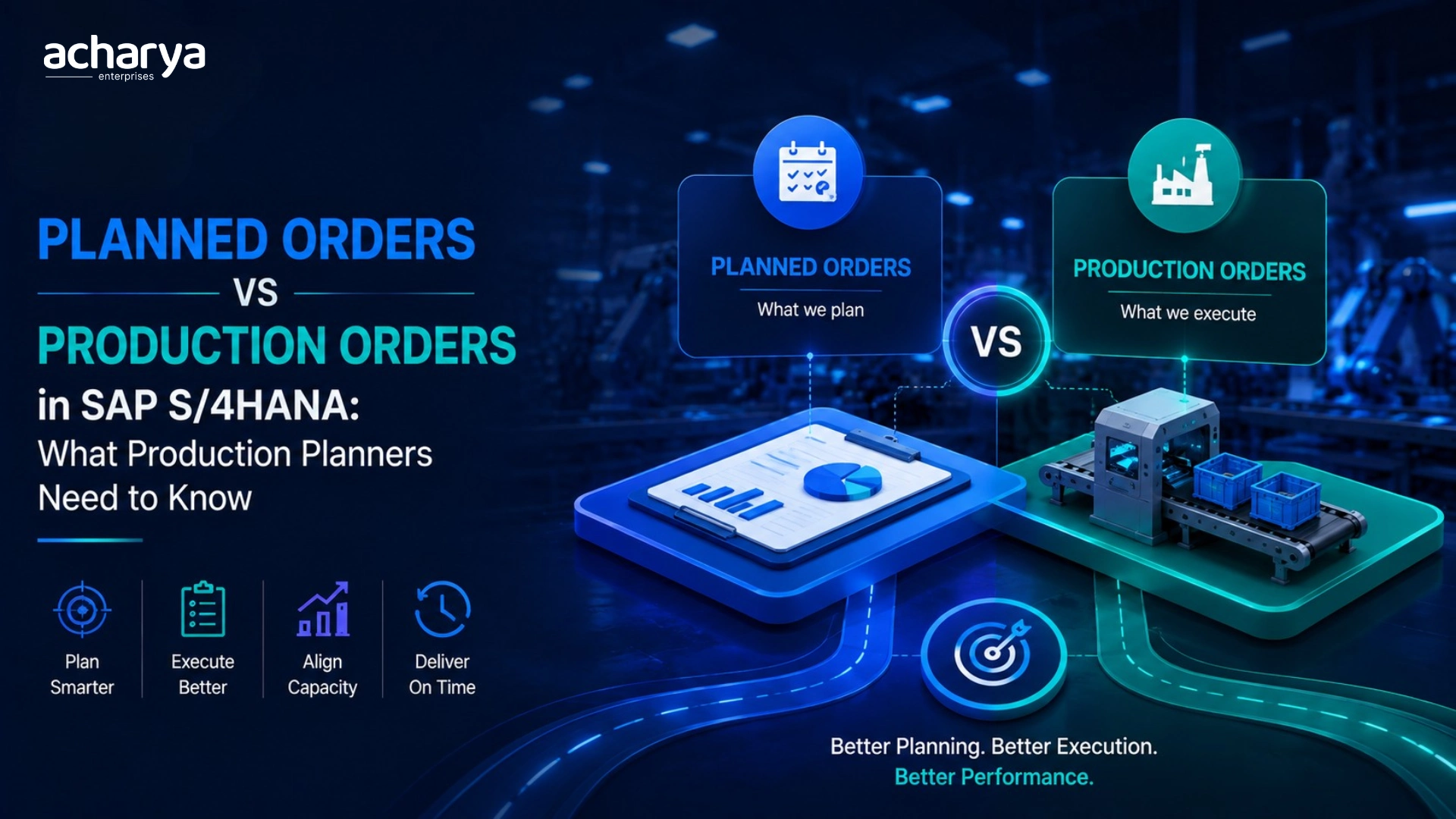
This is where planned orders and production orders in SAP S/4HANA fits naturally because correct master data affects what planning creates and what production executes.
How do BOMs, routings, work centers, and production versions work together?
BOMs define what materials are needed, routings define how products are made, work centers define where production happens, and production versions connect these elements for execution.
A simple SAP BOM routing work center explained view looks like this:
| Master data element | Role in planning | Business impact |
| BOM | Defines materials and quantities | Supports MRP and costing |
| Routing | Defines operation sequence | Supports scheduling |
| Work center | Defines production resource | Supports capacity planning |
| Production version | Links BOM and routing | Supports correct execution |
These four elements must work together.
If one is wrong, the planning result becomes unreliable.
For example, a correct BOM with an outdated routing still creates scheduling risk. A correct routing with wrong work-center capacity still creates overloads.
What are common SAP S/4HANA Production Planning master data challenges?
Common SAP S/4HANA Production Planning master data challenges include incorrect BOMs, outdated routings, inaccurate capacity data, missing production versions, and weak data governance.
Most planning problems are blamed on the system, but many begin with master data.
Common challenges include:
- Incorrect BOM data
- Outdated routings
- Inaccurate capacity information
- Missing production versions
- Duplicate material records
- Poor approval control
- Weak data ownership
- Untrained users maintaining key fields
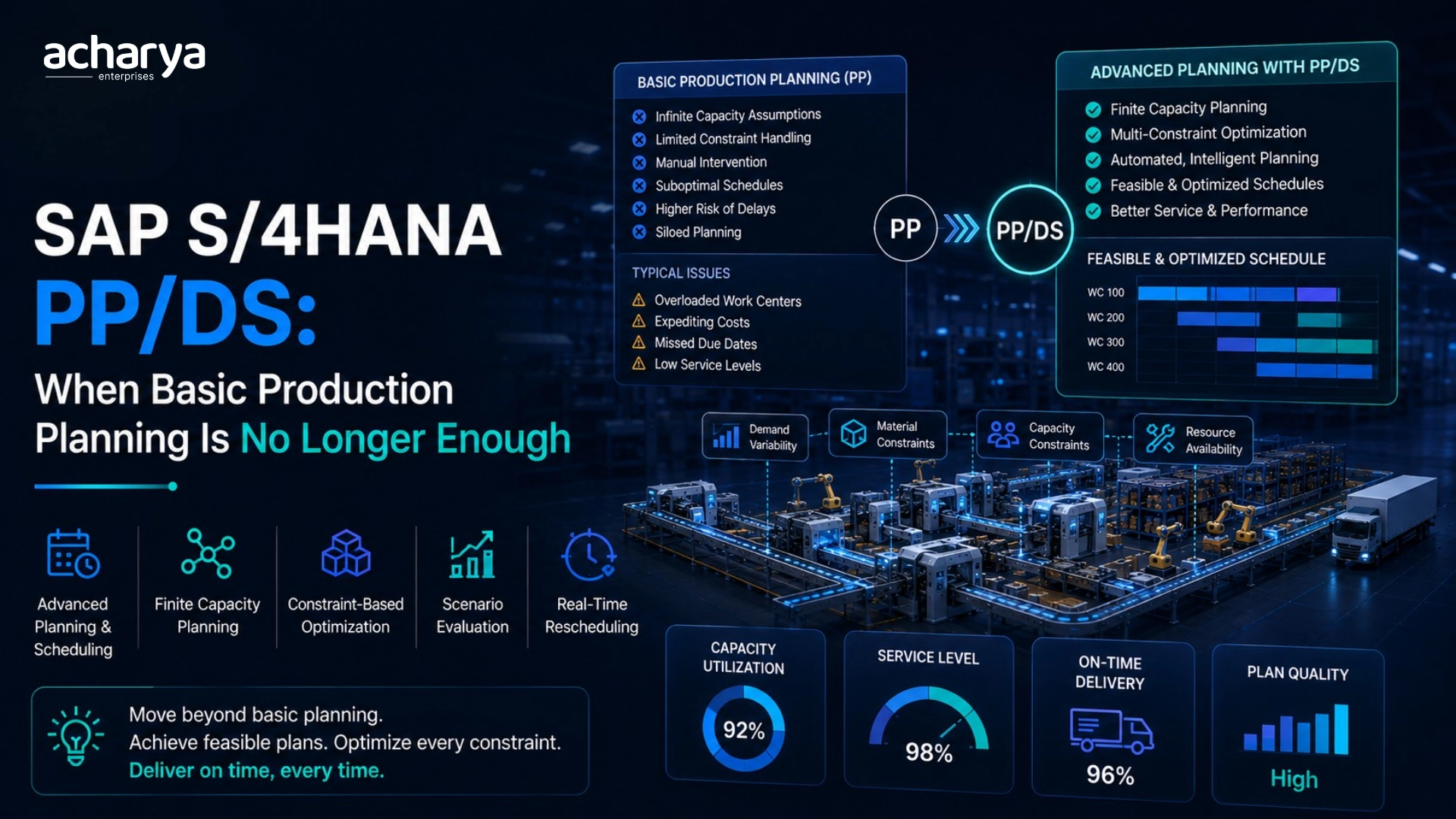
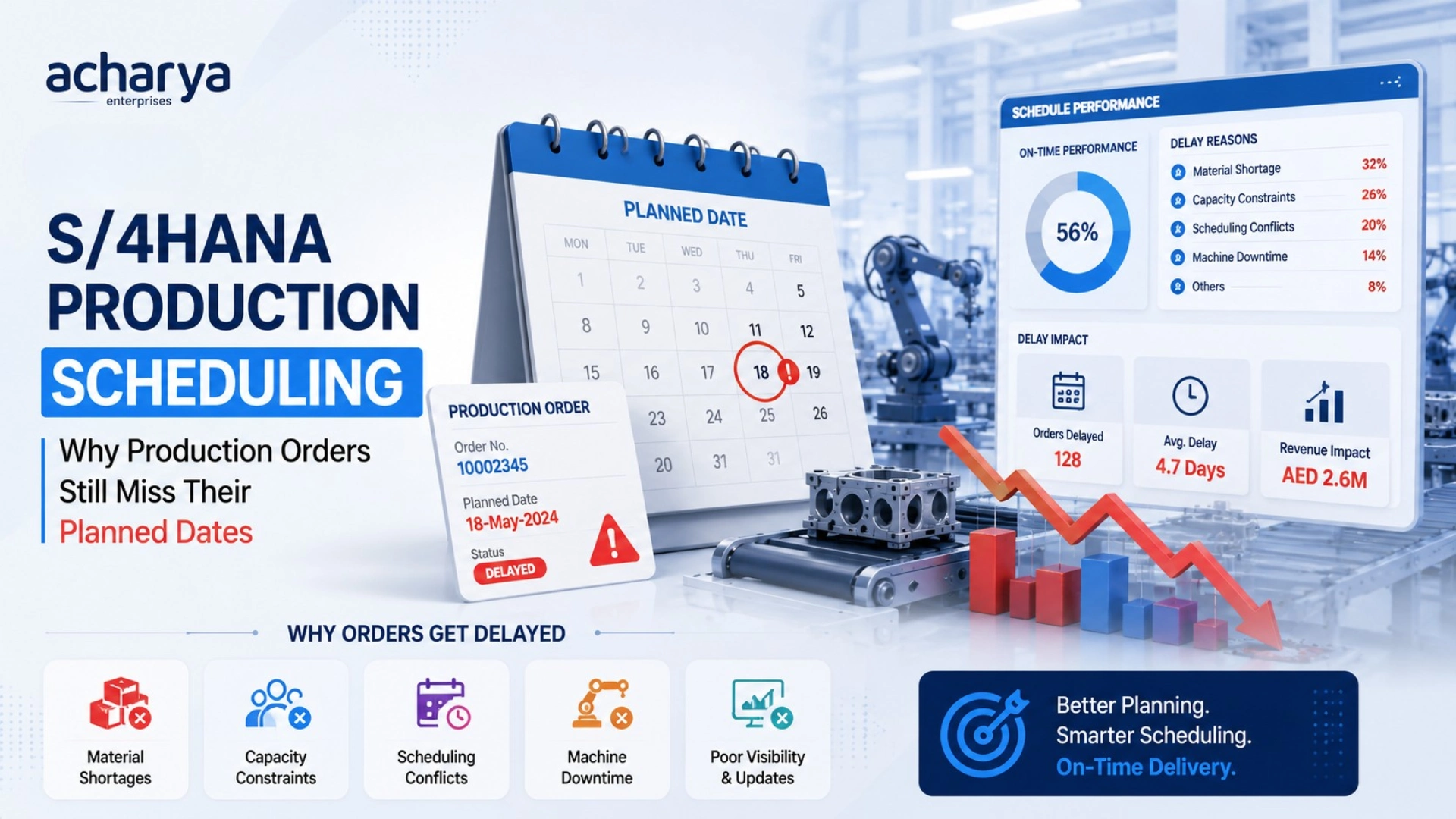
These gaps create production scheduling challenges because planners cannot trust the data behind the plan. production scheduling challenges
For UAE manufacturers preparing an SAP S/4HANA manufacturing master data setup, the first step is not configuration. It is deciding who owns the data, who approves changes, and how often master data is reviewed.
A practical SAP PP master data configuration guide should include data ownership, field standards, migration checks, test scenarios, user training, and post-go-live monitoring.
Key Takeaways
SAP S/4HANA Production Planning master data helps UAE manufacturers improve planning accuracy, production reliability, and shop floor control.
- BOMs define the materials required for production.
- Routings define the manufacturing steps and operation sequence.
- Work centers define where production happens and how much capacity is available.
- Production versions connect valid BOM and routing combinations.
- Poor master data creates planning errors, shortages, delays, and cost leakage.
- UAE manufacturers should clean master data before implementation or optimization.
- Master data governance should include ownership, approvals, audits, and training.
- Acharya can support assessment, implementation, data migration, go-live, hypercare, and user adoption through its Full Implementation + License + Support + Training package.
Improve Your SAP S/4HANA Production Planning Accuracy
Build reliable production planning processes with accurate master data, optimized workflows, and better manufacturing visibility.
If your UAE manufacturing team is planning with outdated BOMs, unclear routings, weak work-center capacity, or missing production versions, the next step is a SAP S/4HANA Production Planning master data readiness review.