SAP S/4HANA Production Planning for Make-to-Stock vs Make-to-Order Manufacturing
SAP S/4HANA Production Planning helps UAE manufacturers choose and manage the right production model, whether they produce for forecasted demand, confirmed customer orders, or a mix of both.
For factories in Dubai, Abu Dhabi, Sharjah, Ras Al Khaimah, and UAE free zones, the choice between make-to-stock and make-to-order affects inventory cost, delivery speed, capacity use, procurement timing, and AED working capital.
A clear SAP production strategy matters because the wrong model can create excess inventory, customer delays, urgent material buying, or poor production visibility.
For the wider planning foundation, SAP S/4HANA production planning process gives useful context before comparing MTS and MTO.
How does SAP S/4HANA Production Planning support make-to-stock and make-to-order manufacturing?
SAP S/4HANA Production Planning supports both make-to-stock and make-to-order manufacturing by helping businesses plan materials, manage production schedules, and optimize resources based on customer demand patterns and production strategies.
SAP S/4HANA supports different manufacturing models by connecting demand, inventory, material requirements, production orders, and capacity planning.
For UAE manufacturers, this is useful because not every product should be planned the same way. A fast-moving retail item may need SAP make to stock, while a customized industrial product may need SAP make to order.
The right setup improves planning accuracy, connects demand with production, and helps teams avoid using one production model for every product.
What is the difference between make-to-stock and make-to-order manufacturing?
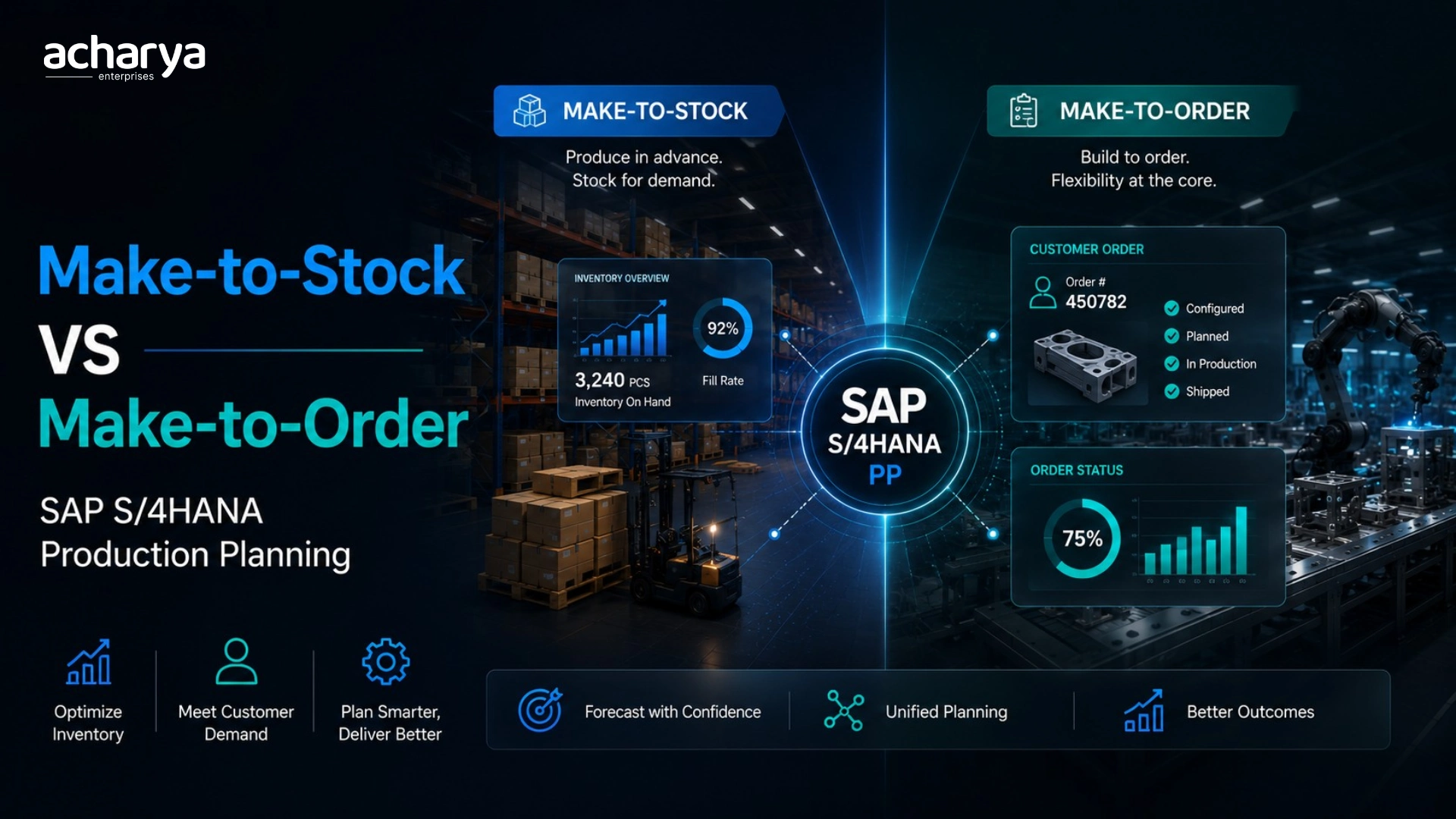
Make-to-stock produces goods before customer orders based on forecasted demand, while make-to-order produces goods after receiving a specific customer order.
The Difference between MTS and MTO in SAP is mainly about what triggers production.
Make-to-stock is forecast driven. Make-to-order is customer-order driven.
| Area | Make-to-stock | Make-to-order |
| Production trigger | Forecast or planned demand | Confirmed sales order |
| Inventory approach | Finished goods kept in stock | Lower finished goods stock |
| Best for | Standard, repeat-demand products | Customized or low-volume products |
| Risk | Excess inventory | Longer delivery lead time |
| Main planning focus | Forecast accuracy | Order visibility and execution |
SAP MTS MTO planning helps manufacturers decide whether speed, customization, inventory control, or customer-specific production matters most.
How does SAP S/4HANA Production Planning support make-to-stock manufacturing?
SAP S/4HANA Production Planning supports make-to-stock manufacturing by using forecast-based demand, planned requirements, MRP, inventory visibility, and production scheduling.
The SAP S/4HANA make to stock process is useful when products have repeatable demand.
Examples include FMCG goods, packaging materials, food items, standard spare parts, retail products, and commonly ordered industrial components.
In make-to-stock, the business plans production before actual sales orders arrive. This helps UAE manufacturers keep finished goods ready for distributors, retail channels, export customers, or project-based supply needs.
SAP Help confirms make-to-stock scenarios can use planned independent requirements, and MRP can create production plans from those requirements.
What are the benefits of using SAP S/4HANA for make-to-stock production?
SAP S/4HANA helps make-to-stock manufacturers reduce shortages, improve inventory control, speed up order fulfillment, and plan resources more effectively.
The biggest benefit is faster fulfillment.
If demand is predictable, finished goods can be available before the customer places the order. That helps UAE businesses serving retail chains, supermarkets, construction suppliers, and regional distributors.
Key benefits include:
- Reduced stock shortages
- Better inventory control
- Faster order fulfillment
- Improved production efficiency
- Optimized resource planning
- Clearer material planning
- Better warehouse readiness
The risk is overproduction. If forecasts are wrong, stock can sit in warehouses and block AED working capital.
How does SAP S/4HANA Production Planning support make-to-order manufacturing?
SAP S/4HANA Production Planning supports make-to-order manufacturing by linking production planning to customer orders, order-specific requirements, and customized production workflows.
Make-to-order manufacturing with SAP S/4HANA is useful when products are customized, engineered, configured, or produced only after confirmed demand.
SAP Help states that make-to-order planning is closely linked to sales orders, which creates customer-specific visibility in the stock and requirements view.
For UAE manufacturers, this fits industries such as machinery, industrial equipment, custom packaging, fabrication, furniture, specialized components, and project-based manufacturing.
SAP production planning for MTO manufacturing helps teams see which customer order triggered production and what materials, operations, and delivery dates are connected to it.
What are the benefits of using SAP S/4HANA for make-to-order production?
SAP S/4HANA helps make-to-order manufacturers reduce excess inventory, improve customization control, track customer orders better, and lower finished-goods storage cost.
Make-to-order reduces the need to hold large finished goods inventory because production starts after a customer order.
This is valuable for UAE manufacturers with high-value, customized, or slow-moving products.
Key benefits include:
- Reduced excess inventory
- Improved customization control
- Better customer order tracking
- Lower storage costs
- Increased production flexibility
- Stronger link between sales and production
- Better margin control for custom orders
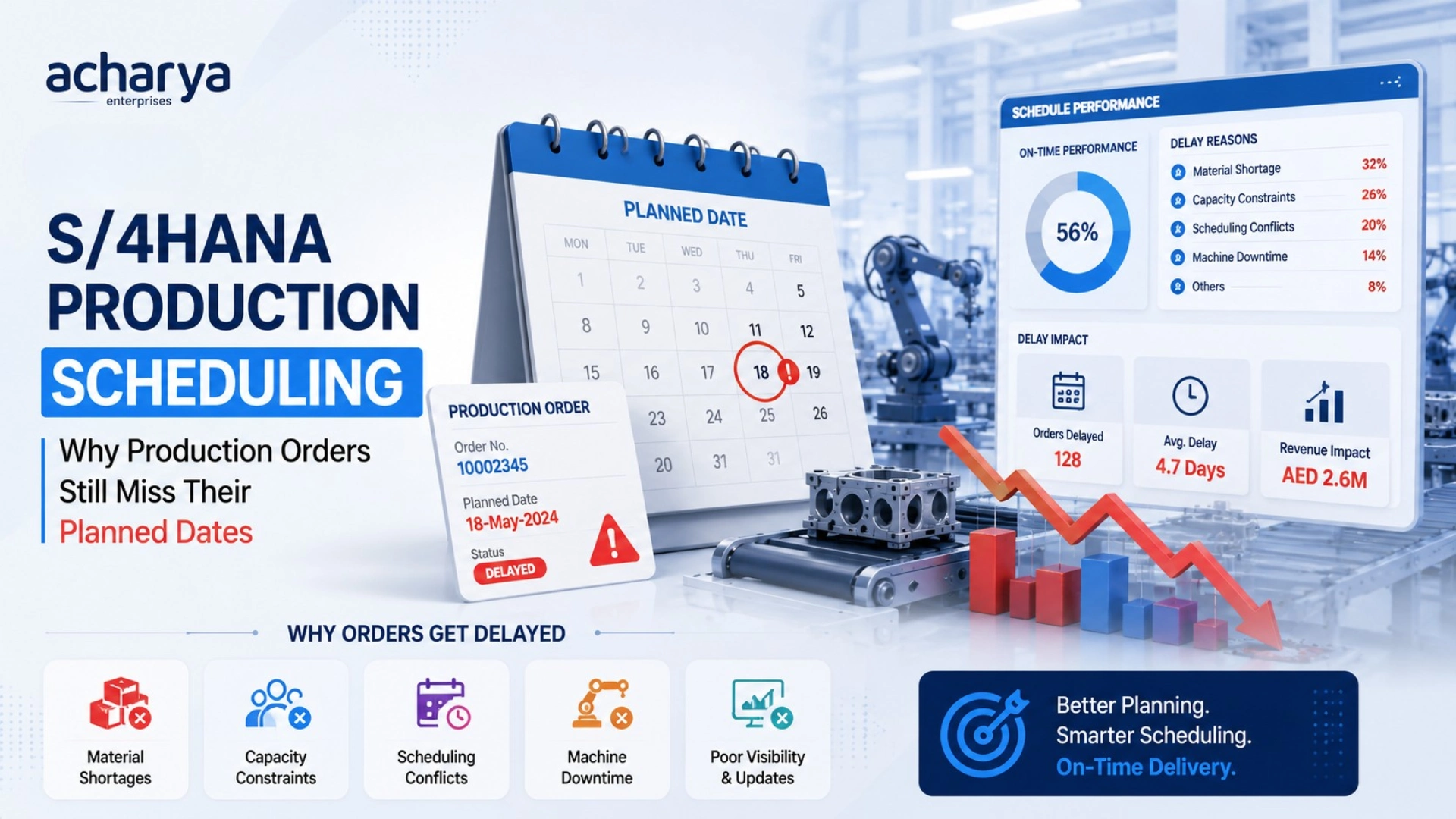
The tradeoff is lead time. If material availability or capacity planning is weak, customer delivery can suffer.
How does SAP S/4HANA handle material planning for both manufacturing models?
SAP S/4HANA handles material planning for both models by checking demand, available stock, procurement needs, shortage risks, and planned supply.
In make-to-stock, material planning is driven by forecasted demand and stock targets.
In make-to-order, material planning is driven by customer orders and order-specific requirements.
Both models need accurate material master data, BOMs, routings, lead times, supplier information, and inventory records.
A strong SAP manufacturing process helps answer:
- What material is needed?
- When is it needed?
- Is stock available?
- Is supplier lead time reliable?
- Will production be delayed?
- Should procurement act now?
This is where SAP S/4HANA demand based production planning improves coordination between production, procurement, warehouse, and finance teams.
How does SAP S/4HANA improve production scheduling for make-to-stock and make-to-order?
SAP S/4HANA improves production scheduling by helping planners align capacity, resources, production orders, material readiness, and changing demand.
Make-to-stock scheduling focuses on meeting forecasted demand while keeping inventory at the right level.
Make-to-order scheduling focuses on meeting customer-specific delivery dates while managing materials, capacity, and order complexity.
In both cases, SAP S/4HANA helps planners manage:
- Capacity planning
- Resource allocation
- Production order management
- Schedule optimization
- Faster response to changes
- Material readiness
- Shop floor coordination
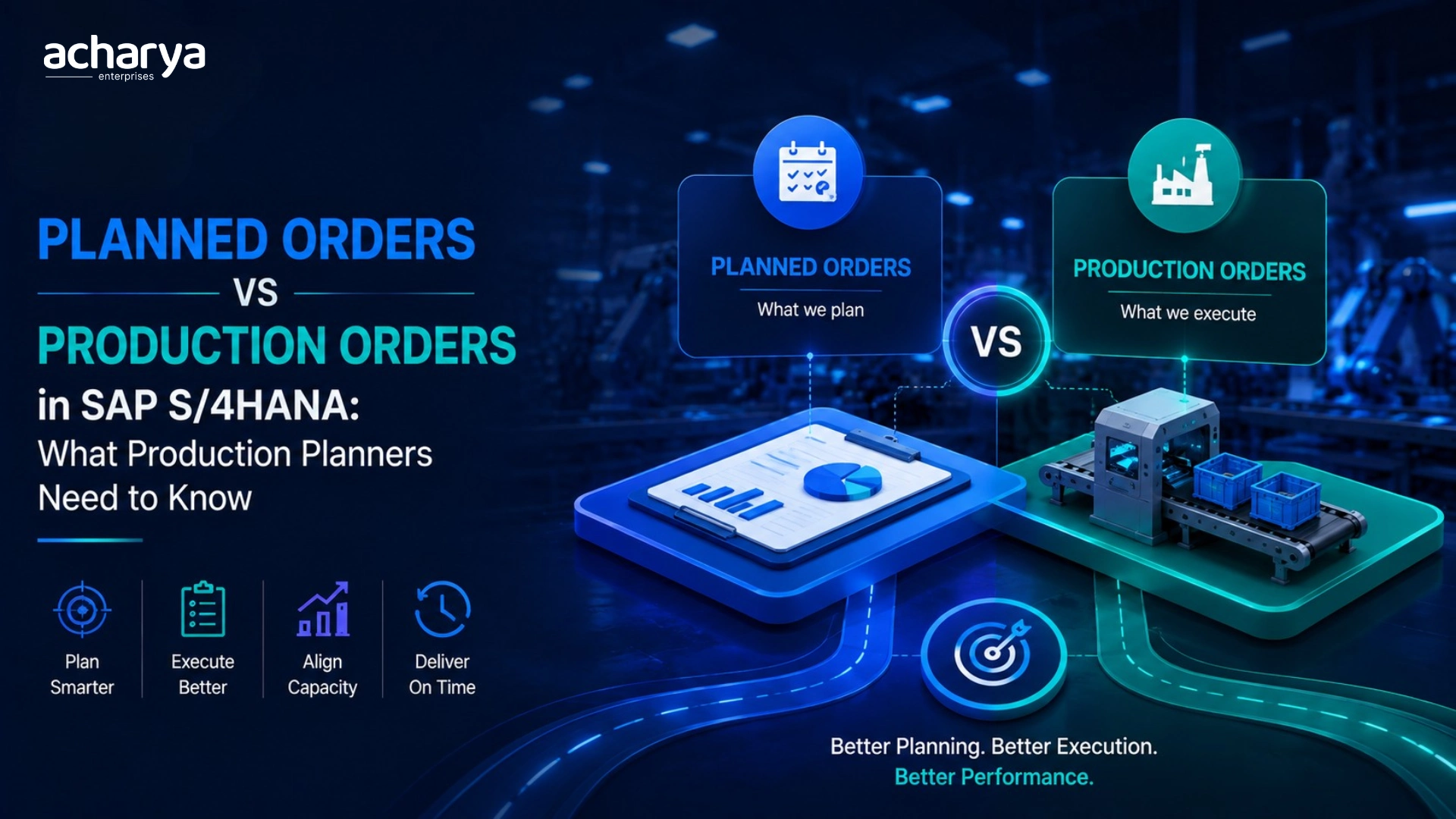
When planning requirements need to become executable factory work, converting planned requirements into production orders fits naturally with this section.
How can manufacturers choose between make-to-stock and make-to-order with SAP S/4HANA?
Manufacturers can choose between make-to-stock and make-to-order by analyzing demand stability, product complexity, inventory cost, delivery expectations, and business goals.
SAP MTO vs MTS which is better? The answer depends on the product and customer promise.
A standard item with steady demand may fit make-to-stock. A customized item with unique customer specifications may fit make-to-order.
Use this decision table:
| Decision factor | Better fit |
| Stable repeat demand | Make-to-stock |
| High customization | Make-to-order |
| Fast delivery required | Make-to-stock |
| High inventory cost | Make-to-order |
| Product made per customer | Make-to-order |
| Standard SKU sold often | Make-to-stock |
For UAE manufacturers, the best model may also vary by business unit, plant, product family, customer segment, or free-zone export flow.
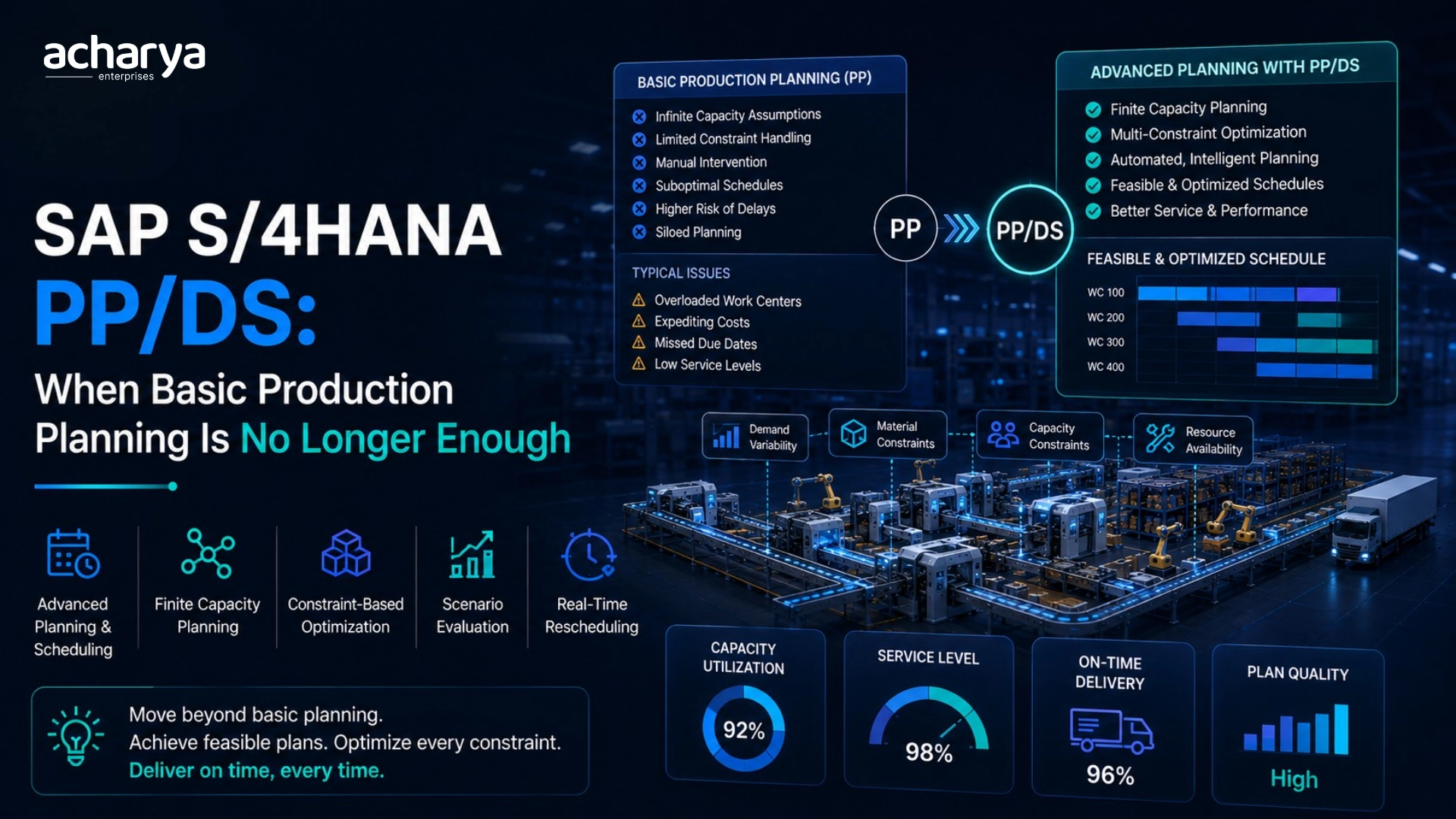
When leadership needs to test demand and capacity impact before deciding, demand and capacity simulation in SAP S/4HANA supports a better planning discussion.
What challenges can SAP S/4HANA help solve in both manufacturing approaches?
SAP S/4HANA can help solve production delays, material shortages, poor inventory visibility, inefficient scheduling, and limited planning insight in both MTS and MTO models.
Both models can fail if data and process discipline are weak.
Make-to-stock can create too much inventory if forecasts are poor. Make-to-order can create late deliveries if materials, capacity, or order visibility are weak.
Common challenges include:
- Unplanned production delays
- Material shortages
- Poor inventory visibility
- Inefficient scheduling
- Limited production insights
- Weak coordination between sales and production
- Manual planning outside SAP
- Delayed shop floor updates
SAP PP strategies for manufacturing companies should be reviewed by product type, not applied as one standard rule across the whole business.
This is where Acharya’s Full Implementation + License + Support + Training package fits naturally. It can support assessment, license planning, implementation, data migration, go-live, hypercare, and user training for UAE manufacturers modernizing production planning.
Key Takeaways
SAP S/4HANA Production Planning helps UAE manufacturers manage both make-to-stock and make-to-order models with better visibility, control, and planning accuracy.
- Make-to-stock produces based on forecasted demand.
- Make-to-order produces after a confirmed customer order.
- SAP S/4HANA supports both models through demand planning, MRP, scheduling, production orders, and inventory visibility.
- Make-to-stock supports faster fulfillment but needs strong forecast control.
- Make-to-order supports customization but needs strong order and material visibility.
- UAE manufacturers may need both models across different product families.
- Clean master data is essential for either approach.
- The right SAP production strategy should match demand behavior, product complexity, delivery promise, and inventory cost.
Optimize Your Manufacturing Strategy with SAP S/4HANA
Improve production planning, inventory control, and operational visibility with SAP S/4HANA solutions designed for modern manufacturing.
If your UAE manufacturing team is unsure whether make-to-stock, make-to-order, or a hybrid production model fits your business, the next step is a SAP S/4HANA Production Planning readiness review.