What Is MRP Live in SAP S/4HANA?
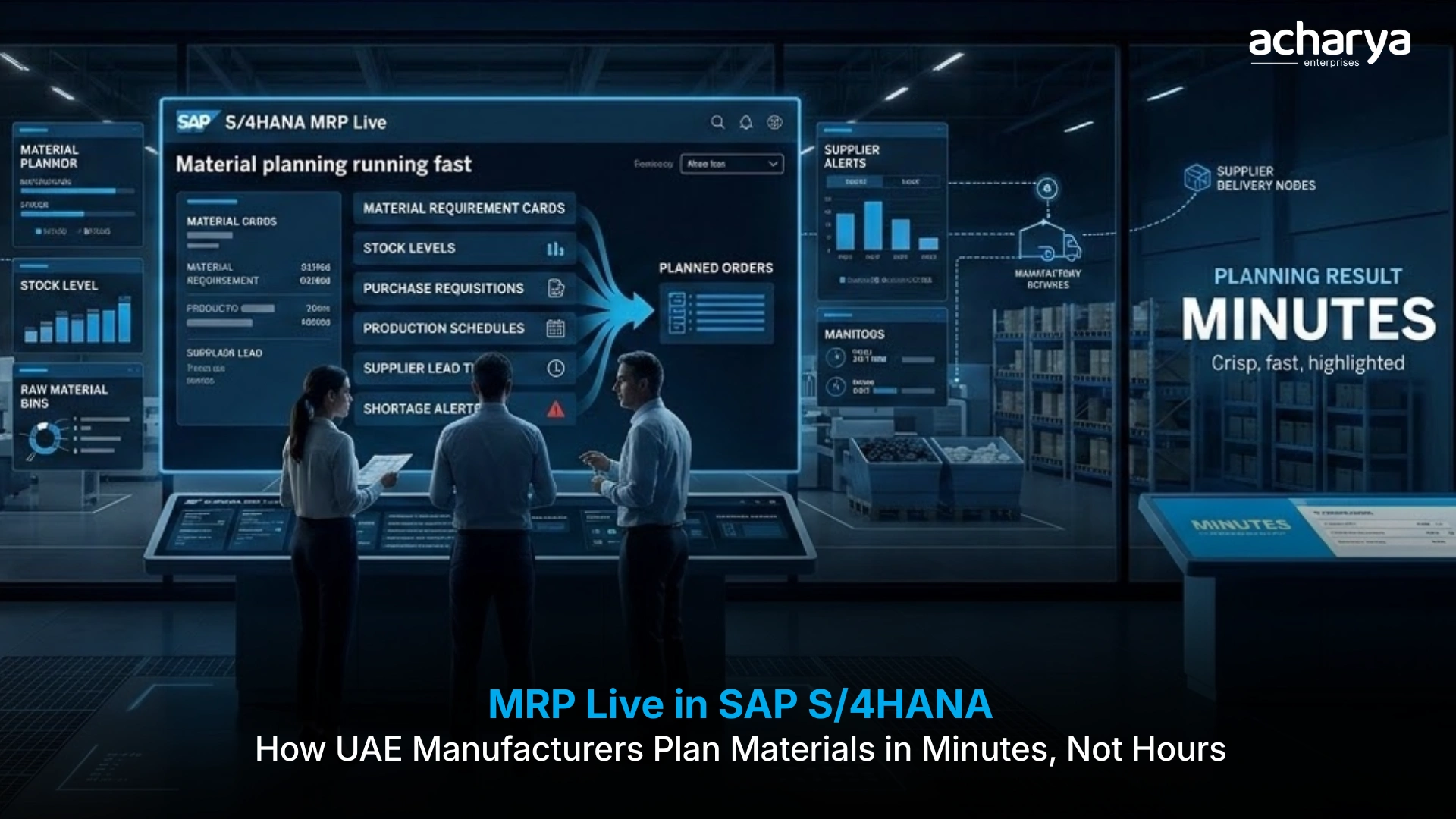
MRP Live in SAP S/4HANA is the material planning run that calculates demand, supply, stock, shortages, and procurement proposals faster inside SAP S/4HANA.
MRP means material requirements planning. It helps manufacturers understand what materials are needed, when they are needed, and how much should be purchased or produced.
For UAE manufacturers, this supports faster planning across raw materials, packaging, spare parts, semi-finished goods, and finished products.
Why Material Planning Still Takes Hours for Many UAE Manufacturers
Material planning still takes hours when teams depend on spreadsheets, delayed inventory updates, manual shortage checks, and disconnected production schedules.
Production may know a batch changed. Warehouses may know stock moves. Procurement may know a supplier shipment is delayed.
But if planning does not see these changes quickly, buyers raise urgent requests, production waits for material confirmation, and finance sees excess inventory after the fact.
Why UAE Manufacturers Need Faster Material Planning
UAE manufacturers need faster material planning because demand, supplier timelines, import dependencies, and production priorities can change quickly.
Many UAE factories serve local demand, GCC distribution, export customers, retail networks, construction projects, and FMCG channels at the same time.
A late material signal can trigger overtime, emergency buying, delayed production, or unnecessary buffer stock. Faster material planning S/4HANA gives planners more time to act before shortages reach the line.
How Does MRP Live Help UAE Manufacturers Plan Materials Faster?
MRP Live in SAP S/4HANA helps UAE manufacturers calculate material requirements faster by connecting demand, stock, procurement, and production data in one planning run.
UAE manufacturers often lose time because material planning is slow, manual, and disconnected from real-time demand, inventory, procurement, and production data.
A factory in Jebel Ali, Dubai Industrial City, Abu Dhabi, Sharjah, or Ras Al Khaimah cannot wait hours to know which raw materials are short or which purchase orders are late. For wider manufacturing context, S/4HANA for UAE manufacturing fits naturally here.
Step 1: Read Real-Time Demand and Production Requirements
MRP Live starts by reading demand and production requirements so the planning run understands what the factory needs to make.
Demand can come from sales orders, forecasts, production plans, dependent requirements, or internal stock replenishment needs.
When the plan drives execution, connect shop floor to planning becomes important because production updates help planners see what is actually happening inside the factory.
Step 2: Check Current Inventory and Available Stock
MRP Live checks current inventory and available stock so planners know what can be used before new procurement or production is proposed.
Available stock is not only what sits in the warehouse.
It may include unrestricted stock, quality inspection stock, blocked stock, stock committed to another order, or stock located in another UAE plant or warehouse.
Step 3: Calculate Material Shortages Automatically
MRP Live calculates material shortages automatically by comparing requirements with available stock and expected supply.
This is where SAP MRP becomes useful for daily planning decisions.
Instead of checking every material manually, planners can focus on the shortages that affect production continuity, customer delivery, or high-value orders.
Step 4: Suggest Purchase Requisitions and Planned Orders
MRP Live can suggest purchase requisitions and planned orders based on demand, inventory, procurement lead times, and planning rules.
Purchase requisitions help procurement respond to external supply needs.
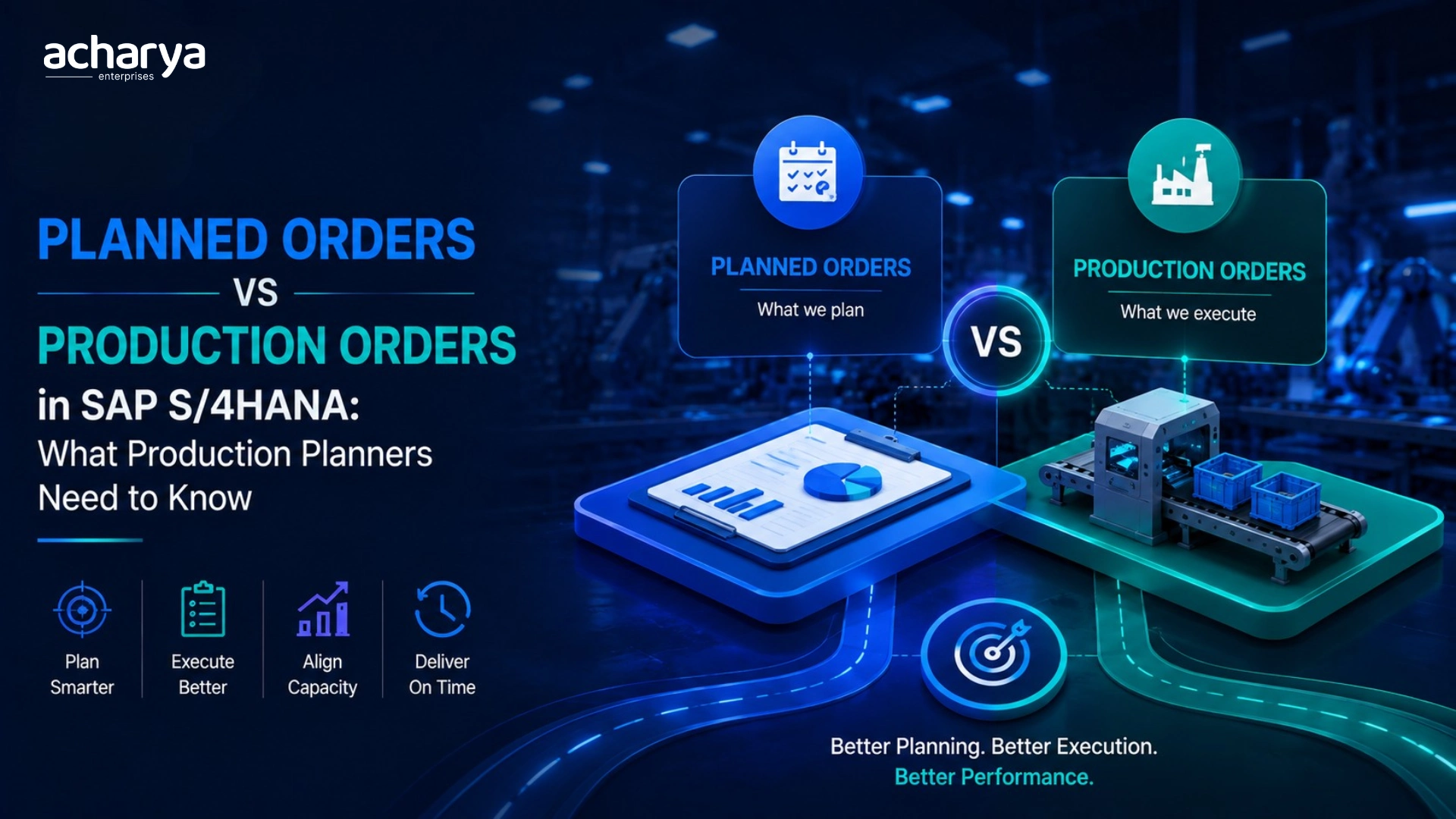
Planned orders help production teams prepare internal manufacturing requirements. This helps material planning SAP users move from manual calculation to proposal review.
Step 5: Prioritize Critical Materials for Production
MRP Live helps planners prioritize critical materials by highlighting items that can stop production or delay customer delivery.
Not every shortage has the same business impact.
A low-value component can stop a high-value batch. A missing raw material can delay a full FMCG, packaging, food, or industrial production run.
Step 6: Update Plans When Demand or Stock Changes
MRP Live supports more frequent planning updates when demand, stock, purchase orders, or production requirements change.
This is the practical difference between planning once and planning when the business needs it.
MRP Live vs classic MRP should be evaluated carefully, but the key business point is that faster runs make it easier to refresh planning during the day.
Step 7: Give Planners a Clear View of Exceptions
MRP Live gives planners a clearer view of exceptions so they can act on the materials that need attention first.
Planners do not need more noise. They need to know which material is late, which order is affected, which supplier is involved, and what action is needed.
| Exception signal | Planning action |
| Material shortage | Expedite or reschedule |
| Late supply | Follow up with procurement |
| Excess stock | Reduce future orders |
| Changed demand | Recalculate requirement |
How MRP Live Helps Reduce Stockouts
MRP Live helps reduce stockouts by identifying shortages earlier and giving procurement or production teams more time to act.
Stockouts often happen because shortage signals arrive too late.
When planning runs faster and more frequently, teams can respond before production is affected. For the inventory outcome of faster planning, cut stockouts with SAP S/4HANA connects naturally here.
How MRP Live Helps Avoid Excess Inventory
MRP Live helps avoid excess inventory by showing when available stock and incoming supply already cover demand.
Excess stock is often created by old demand assumptions, duplicate planning, manual buffers, or delayed stock updates.
MRP Live can help planners avoid unnecessary purchase proposals when stock or confirmed supply is already enough.
How MRP Live Supports Production, Procurement, and Finance Teams
MRP Live supports production, procurement, and finance by creating a shared planning view of demand, supply, shortages, and inventory exposure.
Production gets better visibility into material readiness.
Procurement gets clearer purchase priorities. Finance gets better control over excess stock, urgent buying, and AED working capital pressure.
Common Material Planning Problems MRP Live Helps Fix
MRP Live helps fix planning problems caused by stale stock data, slow planning runs, unclear shortages, and manual procurement signals.
Common problems include outdated inventory, shortages found too late, over-ordering, too many spreadsheet checks, slow reaction to demand changes, and procurement not aligned with production urgency.
Key insight: MRP Live helps planners move from data chasing to decision-making.
What UAE Manufacturers Should Prepare Before Using MRP Live
UAE manufacturers should prepare clean master data, planning rules, lead times, BOMs, stock records, and user training before using MRP Live.
MRP Live is only as reliable as the planning inputs behind it.
Before rollout, manufacturers should check material masters, BOMs, routings, supplier lead times, safety stock rules, reorder points, lot sizing, plant setup, user roles, and access controls.
Acharya’s Full Implementation + License + Support + Training package fits here because MRP success depends on assessment, implementation, data migration, go-live, hypercare, and user adoption.
Final Thoughts: From Slow MRP Runs to Real-Time Material Planning
MRP Live helps UAE manufacturers move from slow planning cycles to faster, more responsive material planning.
For UAE factories, material planning speed directly affects production continuity, procurement discipline, delivery confidence, and inventory cost.
The next step is to review one plant or high-volume product family, check planning data quality, and identify where faster MRP runs can reduce shortages and overstock.
Key Takeaways
MRP Live in SAP S/4HANA helps UAE manufacturers plan materials faster, reduce shortages, and improve inventory decisions.
- MRP Live supports faster and more frequent planning runs.
- Faster planning helps UAE factories react to demand, stock, and production changes sooner.
- MRP Live compares demand with available stock and expected supply.
- It can propose purchase requisitions and planned orders.
- Better exception visibility helps planners focus on urgent materials.
- Clean master data is essential for reliable MRP output.